

Nintendo: The Company That Saved Gaming

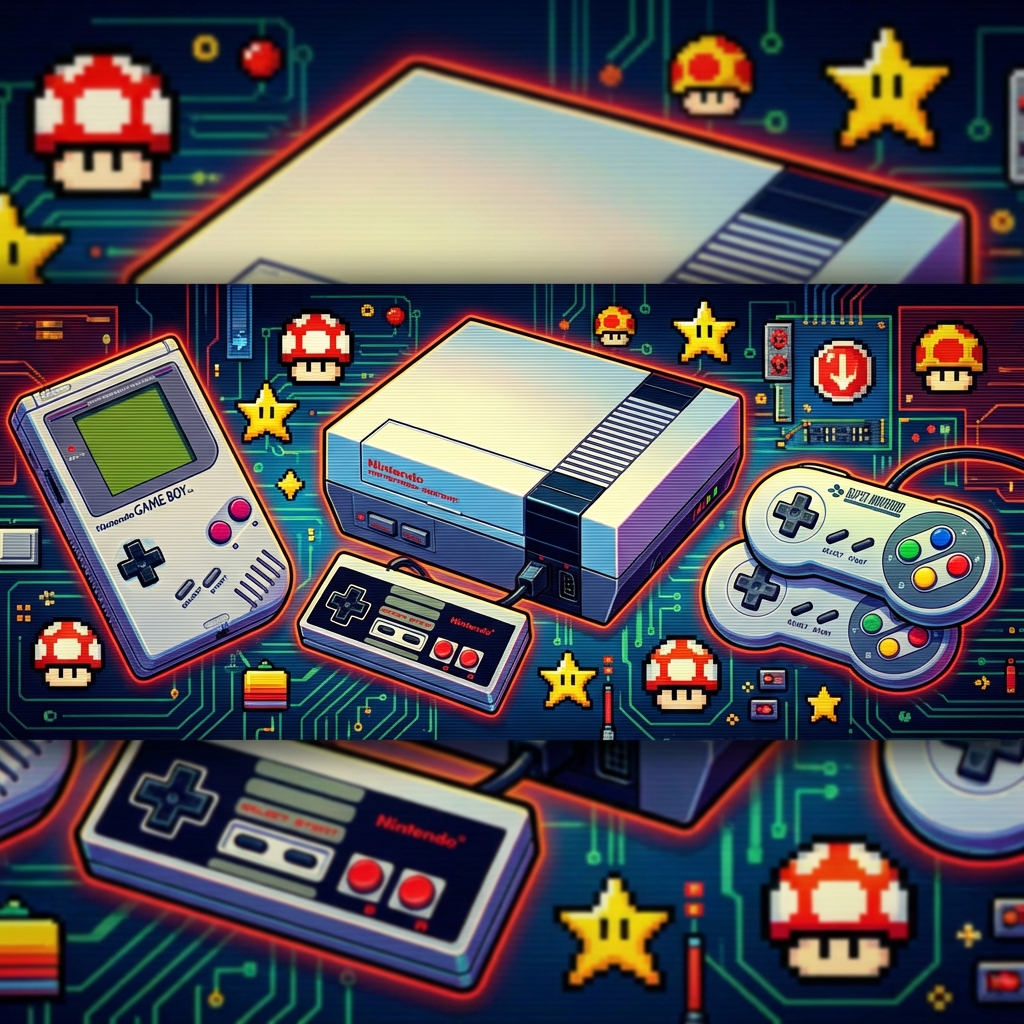
From Playing Cards to Global Domination
When a Japanese playing card company decided to enter the video game market in the late 1970s, few could have predicted it would literally save an entire industry from extinction and become one of the most valuable entertainment companies on Earth.
Nintendo didn't just make consoles—it redefined what gaming could be. It created characters more recognizable than Mickey Mouse, franchises worth billions, and a philosophy of "gameplay first" that still guides the industry. This is the complete story of how Nintendo changed entertainment forever.
Historical Context: From Hanafuda to Home Consoles
The Early Years (1889-1979): Finding Their Way
Founded in 1889 by Fusajiro Yamauchi, Nintendo Koppai started as a playing card manufacturer in Kyoto. The name "Nintendo" loosely translates to "leave luck to heaven." For decades, they made Hanafuda cards, then expanded into toys in the 1960s.
Under Hiroshi Yamauchi (president 1949-2002), Nintendo diversified wildly—instant rice, taxi services, love hotels. None worked. But in the 1970s, they discovered electronic games. Gunpei Yokoi's Game & Watch handhelds (1980-1991) sold over 43 million units, proving Nintendo understood portable gaming.
The Savior Era (1983-1996): Total Revolution
The 1983 North American Video Game Crash nearly killed the industry. Atari flooded the market with terrible games (E.T., anyone?), consumers lost trust, and retailers refused to stock consoles.
Nintendo saw an opportunity. They launched the Famicom in Japan (July 1983), selling 500,000 units in two months. For North America, they redesigned it as the Nintendo Entertainment System (NES), deliberately making it look like a VCR to avoid the "toy" stigma.
The NES launched in New York test markets in October 1985, bundled with R.O.B. the robot and Duck Hunt to seem sophisticated. It was a phenomenon. By 1990, 30% of American homes had an NES—more than dishwashers.
Handheld Dominance + 16-Bit (1989-2001): Unstoppable
The Game Boy (1989) seemed underpowered compared to competitors like the Atari Lynx and Sega Game Gear. But it was cheaper, more durable, and had Nintendo's games. Tetris bundled wit it made it essential. Over 118 million Game Boys were sold.
The Super Nintendo (SNES/Super Famicom, 1990/1991) faced Sega's aggressive marketing ("Genesis does what Nintendon't"). But Nintendo had Super Mario World, The Legend of Zelda: A Link to the Past, and Super Metroid. The SNES sold 49 million units and cemented Nintendo's dominance.
🎮 The NES: Saving an Industry
Technical Revolution
- CPU: Ricoh 2A03 (6502-based) @ 1.79 MHz
- Graphics: sprites, smooth scrolling, 52 colors on-screen
- Sound: 5-channel audio chip
- Games: Cartridge-based with space for 1 MB+
The Nintendo Seal of Quality
To avoid another crash, Nintendo controlled everything. Third-party developers had to get approval. The Nintendo Seal of Quality guaranteed a baseline of competence. It worked—consumers trusted Nintendo games.
Legendary NES Games
- Super Mario Bros. (1985): Sold 40 million copies. Defined platform perfection.
- The Legend of Zelda (1986): Open-world exploration with battery saves
- Metroid (1986): Atmospheric exploration, female protagonist reveal
- Mega Man 2 (1988): Capcom's masterpiece, incredible music
- Castlevania series: Gothic horror action
- Final Fantasy (1987): Saved Squaresoft, launched RPG dominance
🎮 The Game Boy: Gaming Goes Portable
Simple But Unbeatable
Designer Gunpei Yokoi believed in "lateral thinking with withered technology"—use cheap, proven tech creatively. The Game Boy had a green monochrome screen, but it ran for 30 hours on 4 AA batteries.
Tetris Changes Everything
Tetris (1989) wasn't just a pack-in—it was the killer app that proved puzzle games could sell hardware. Its addictive gameplay worked perfectly on a portable. Over 35 million Tetris copies were sold on Game Boy alone.
Game Boy Essentials
- Pokémon Red/Blue/Yellow (1996/1998): 46 million copies, changed pop culture
- Super Mario Land (1989): Mario goes portable
- The Legend of Zelda: Link's Awakening (1993): A full Zelda adventure in your pocket
- Kirby's Dream Land (1992): Introduced the pink hero
🎮 The SNES: 16-Bit Perfection
Specs That Mattered
- CPU: 65C816 @ 3.58 MHz
- Graphics: Mode 7 rotation/scaling, 32,768 colors available
- Sound: Sony-designed 8-channel ADPCM chip
- Special chips: Cartridges could add FX chips (Star Fox), Super FX (Doom)
SNES Masterpieces
- Super Mario World (1990): Launch title perfection, Yoshi's debut
- The Legend of Zelda: A Link to the Past (1991): Dual-world adventure, dungeon design peak
- Super Metroid (1994): Atmospheric masterclass, speed run culture begins
- Final Fantasy VI (1994): Opera scene, Kefka's villainy, narrative ambition
- Chrono Trigger (1995): Dream team RPG with time travel and multiple endings
- Donkey Kong Country (1994): Pre-rendered graphics that stunned audiences
- Street Fighter II Turbo (1993): Fighting game phenomenon at home
🌟 The Characters That Define Gaming
Mario
Created by Shigeru Miyamoto in 1981's Donkey Kong, Mario is the most recognizable character in gaming—more recognizable than Mickey Mouse to children worldwide. His franchise has sold over 830 million games.
Link & Zelda
The Legend of Zelda franchise pioneered open-world exploration, dungeon puzzles, and epic storytelling. Every entry refined the formula while respecting its roots.
Pokémon
What started as Satoshi Tajiri's bug-collecting hobby became a multi-billion dollar franchise. Pokémon proved Nintendo understood multimedia—games, cards, anime, movies, all working together.
🔗 Resources & Where to Learn More
Essential Links
- Nintendo Official History - Company timeline and philosophy
- National Videogame Museum (UK) - Sheffield museum with Nintendo exhibits
- Super Mario Wiki - Comprehensive franchise database
- Zelda Wiki - Complete Zelda encyclopedia
- Nintendo Life - News, reviews, and retro coverage
- Internet Archive - Console Living Room - Play NES/SNES games in browser
✨ Experience Nintendo History Today
1. Nintendo Switch Online
Subscribe to Nintendo Switch Online + Expansion Pack to play NES, SNES, N64, and Game Boy games legally on modern hardware with save states and rewind features.
2. Retro Consoles
NES Classic Edition and SNES Classic Edition were limited releases but can be found second-hand. They feature HDMI output and 20-30 pre-loaded games.
3. Original Hardware
eBay, retro game shops, and car boot sales still have original consoles. Everdrives (flash cartridges) let you play entire libraries legally if you own the games.
4. Join the Community
Visit our Groups page for local Nintendo collecting clubs, speedrunning communities, and retro gaming meetups.
5. Attend Events
Check Events for retro gaming conventions, Nintendo-themed quiz nights, and speedrunning marathons in your area.
6. Visit Gaming Venues
Explore Places featuring retro gaming bars,arcade cafes with classic Nintendo cabinets, and museums with playable exhibits.
Why Nintendo Still Matters
In 2024-2026, Nintendo remains a titan. The Nintendo Switch has sold over 139 million units, proving their philosophy—"fun gameplay beats raw power"—still resonates.
Their franchises remain culturally dominant. The Super Mario Bros. Movie (2023) grossed $1.36 billion. The Legend of Zelda: Tears of the Kingdom (2023) sold 20 million copies in its first month.
Nintendo taught the industry that games could be art, that characters could be beloved icons, and that innovation mattered more than specs. They saved gaming in 1985, and they're still showing everyone how it's done.
Ready to experience Nintendo's legacy? From Virtual Console to original hardware, from speedruns to casual collecting—the Nintendo community welcomes everyone. Join us and discover why these games are timeless.
Julian Cross
An expert contributor to the Social for Life community, sharing insights on lifestyle and beyond.