

Frames of Mind: Finding Mindfulness Through Smartphone Photography

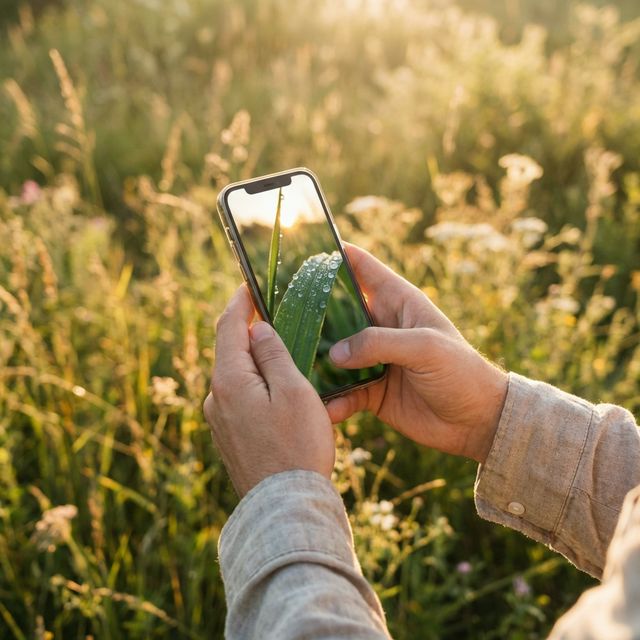
The Camera You Always Have With You
"The best camera is the one you have with you." This photography maxim, popularized by photographer Chase Jarvis, has never been more true. In 2026, 6.8 billion people own smartphones—each carrying a camera more powerful than professional equipment from a decade ago.
The iPhone 15 Pro features a 48-megapixel main sensor, computational photography that rivals DSLRs, and the ability to shoot RAW. The Samsung Galaxy S24 Ultra offers 200 megapixels, 100x zoom, and AI-enhanced night photography. Even budget smartphones produce images that would have been impossible with consumer cameras in 2010.
Yet despite this technological marvel in our pockets, most of us use our smartphone cameras mindlessly: quick snaps for Instagram, blurry photos of receipts, accidental screenshots. We point, tap, and move on—barely seeing what we're photographing.
But what if smartphone photography could be something more? Not just documentation, but meditation. Not just capturing moments, but creating them. Not just taking photos, but truly seeing.
This is photography as mindfulness—and your smartphone is the perfect tool to practice it.
Photography as Mindfulness Practice
What Is Mindfulness?
Mindfulness is the practice of being fully present in the current moment—aware of your thoughts, feelings, sensations, and surroundings without judgment. It's the opposite of autopilot, where we move through life distracted, planning, worrying, or scrolling.
Research shows mindfulness reduces stress, improves focus, enhances emotional regulation, and increases overall well-being. A 2023 study by Oxford University found that just 10 minutes of daily mindfulness practice reduced anxiety by 32% over eight weeks.
How Photography Cultivates Mindfulness
1. Slowing Down
Photography forces you to pause. To frame a shot, you must stop walking, stop thinking about your to-do list, and focus on what's in front of you. This simple act of stopping is the foundation of mindfulness.
2. Heightened Awareness
When you're looking for photos, you notice things you'd normally miss: the way light filters through leaves, the texture of weathered brick, the geometry of shadows. Photography trains you to see, not just look.
3. Engaging the Senses
Mindfulness often involves the "5-4-3-2-1" technique: notice 5 things you see, 4 you hear, 3 you feel, 2 you smell, 1 you taste. Photography naturally engages this sensory awareness—you're observing light, color, texture, composition.
4. Non-Judgmental Observation
Mindfulness teaches observing without judgment. In photography, this means noticing beauty in the mundane—a puddle, a crack in pavement, a discarded coffee cup. You're not evaluating "good" or "bad," just seeing what is.
5. Flow State
When fully absorbed in photography, you enter "flow"—a state of complete immersion where time disappears and self-consciousness fades. This is mindfulness at its deepest.
Smartphone Photography vs. "Snapping for Instagram"
The Instagram Trap
Social media has transformed photography from personal expression to performance. We photograph for likes, not for ourselves. We chase trending aesthetics, not authentic vision. We take 50 shots to get one "perfect" image, then filter it beyond recognition.
This isn't mindfulness—it's anxiety. You're not present with the scene; you're already imagining how it will look on your feed, what caption you'll write, how many likes it will get.
Mindful Photography Is Different
Intent: You photograph to see, not to be seen
Process: You focus on the experience, not the outcome
Sharing: Optional, not obligatory
Editing: Minimal, preserving authenticity
Judgment: None—every photo is practice, not performance
Mindful photography isn't about creating "content." It's about cultivating presence, awareness, and appreciation for the world around you.
The Advantages of Smartphone Photography for Mindfulness
1. Always With You
You don't need to plan a photography session or carry heavy equipment. Your phone is already in your pocket. This means you can practice mindful photography anywhere, anytime—during your commute, lunch break, or evening walk.
2. Zero Cost
Unlike film photography (developing costs) or DSLR photography (expensive lenses), smartphone photography is free. Take 10 photos or 1,000—there's no financial barrier to experimentation.
3. Instant Feedback
You see your photo immediately, allowing you to learn and adjust in real-time. This accelerates skill development and keeps you engaged.
4. Limitations Foster Creativity
Smartphones have limitations: fixed lenses, smaller sensors, digital zoom quality. But constraints breed creativity. You can't zoom endlessly, so you move closer. You can't change lenses, so you change perspective. Limitations force you to see differently.
5. Discreet and Unobtrusive
Smartphones are socially invisible. Pulling out a DSLR draws attention; using your phone doesn't. This allows candid, natural photography without disrupting the scene or making people self-conscious.
Mindful Photography Exercises
Exercise 1: The Daily Walk Photo Challenge
How it works:
During your daily walk (to work, around the neighborhood, in a park), take exactly 10 photos. No more, no less.
Rules:
- Each photo must be of something different
- No deleting and retaking—commit to your 10 shots
- Focus on noticing, not perfection
Why it works:
The 10-photo limit forces you to be selective and intentional. You can't mindlessly snap 50 photos—you must choose what's worth photographing. This cultivates discernment and presence.
Exercise 2: Single Subject, 20 Perspectives
How it works:
Choose one subject (a tree, a building, a bench). Photograph it 20 different ways.
Variations:
- Different angles (high, low, side, straight-on)
- Different distances (close-up, medium, far)
- Different framing (centered, off-center, cropped)
- Different lighting (shade, sunlight, backlit)
- Different focus (sharp, soft, selective)
Why it works:
This exercise trains you to see creatively. By forcing multiple perspectives of the same subject, you break habitual ways of seeing and discover new angles, literally and figuratively.
Exercise 3: Color Hunt
How it works:
Choose a color (red, blue, yellow). Spend 20 minutes photographing only things in that color.
Why it works:
This narrows your focus, training your eye to notice specific details. You'll start seeing your chosen color everywhere—in signs, flowers, clothing, reflections. This heightened awareness is the essence of mindfulness.
Exercise 4: Texture Walk
How it works:
Photograph only textures: bark, brick, fabric, metal, water, stone.
Tips:
- Get close—fill the frame with texture
- Notice how light affects texture (shadows, highlights)
- Touch the surface (if appropriate) before photographing—engage multiple senses
Why it works:
Texture photography forces you to look closely at surfaces you'd normally ignore. It's meditative, tactile, and reveals hidden beauty in everyday materials.
Exercise 5: Golden Hour Gratitude
How it works:
During golden hour (the hour after sunrise or before sunset), photograph things you're grateful for.
Examples:
- Your home (shelter)
- A favorite mug (simple pleasures)
- Trees (nature's beauty)
- Your hands (capability)
Why it works:
Combining photography with gratitude practice doubles the mindfulness benefit. You're present with the scene and cultivating appreciation. Golden hour's soft, warm light makes everything beautiful, reinforcing positive emotions.
Exercise 6: The Mundane Made Beautiful
How it works:
Photograph "boring" everyday objects: a doorknob, a light switch, a drain cover, a parking meter.
Challenge:
Make each photo visually interesting through composition, lighting, or perspective.
Why it works:
This exercise trains you to find beauty anywhere. If you can make a drain cover interesting, you'll never run out of subjects. It's the ultimate mindfulness practice—seeing the extraordinary in the ordinary.
Smartphone Photography Techniques
Composition Basics
Rule of Thirds
Enable your camera's grid (Settings > Camera > Grid). Place your subject along the grid lines or at intersection points, not dead center. This creates more dynamic, balanced compositions.
Leading Lines
Use natural lines (roads, fences, rivers, shadows) to guide the viewer's eye through the image.
Framing
Use natural frames (doorways, windows, arches, branches) to draw attention to your subject.
Negative Space
Don't fill every inch of the frame. Empty space (sky, wall, water) creates breathing room and emphasizes your subject.
Symmetry and Patterns
Look for repeating patterns or perfect symmetry—they're visually satisfying and abundant in architecture and nature.
Lighting Tips
Golden Hour is Magic
The hour after sunrise and before sunset offers soft, warm, flattering light. Shadows are long and gentle, colors are rich.
Avoid Harsh Midday Sun
Direct overhead sun creates harsh shadows and washed-out colors. If you must shoot midday, find shade or use it creatively (strong shadows, high contrast).
Embrace Overcast Days
Cloudy skies act as a giant softbox, creating even, diffused light perfect for portraits, textures, and colors.
Backlighting for Drama
Position your subject between you and the light source (sun, window, lamp). This creates silhouettes or glowing edges.
Blue Hour for Mood
The 20-30 minutes before sunrise and after sunset offer deep blue skies and moody atmosphere.
Smartphone-Specific Tips
Tap to Focus
Don't rely on autofocus. Tap your subject on screen to ensure it's sharp.
Adjust Exposure
After tapping to focus, slide your finger up or down to brighten or darken the image. This gives you creative control over mood.
Use Portrait Mode Wisely
Portrait mode (artificial background blur) works best with clear subject separation. It struggles with complex backgrounds or fine details (hair, glasses).
Shoot in RAW (If Available)
RAW files preserve more image data than JPEGs, allowing greater editing flexibility. Enable in Settings > Camera > Formats > Apple ProRAW (iPhone) or use apps like Lightroom Mobile.
Clean Your Lens
Your phone lives in pockets and bags, accumulating smudges. Wipe the lens with a soft cloth before shooting—it makes a huge difference.
Avoid Digital Zoom
Digital zoom crops and enlarges, degrading quality. Instead, move closer or crop in post-processing.
Use Volume Buttons as Shutter
Tapping the screen can cause camera shake. Use the volume button for a steadier shot, especially in low light.
Editing for Mindfulness (Not Perfection)
The Mindful Editing Approach
Edit to enhance, not transform: Adjust exposure, contrast, and color to reflect what you saw, not create something unrecognizable.
Minimal filters: Heavy filters distance you from the original moment. Use them sparingly.
Embrace imperfection: Slight blur, grain, or "mistakes" add character and authenticity.
Edit immediately or not at all: Either edit right after shooting (while the feeling is fresh) or leave it unedited. Avoid obsessing over edits days later.
Recommended Apps
Snapseed (Free, iOS/Android)
Powerful, intuitive editing with selective adjustments, healing brush, and filters. Perfect for beginners and advanced users.
VSCO (Free with in-app purchases, iOS/Android)
Film-inspired presets and manual controls. Great for achieving analog aesthetics.
Lightroom Mobile (Free with Adobe account, iOS/Android)
Professional-grade editing, RAW support, and cloud sync. Steeper learning curve but incredibly powerful.
Darkroom (iOS, Free with Pro upgrade)
Fast, elegant interface with powerful tools. Excellent for quick, high-quality edits.
Building a Mindful Photography Practice
Start Small
Don't aim for daily hour-long photo walks. Start with 10 minutes, 2-3 times per week. Consistency beats intensity.
Create Rituals
- Morning coffee photo: Photograph your coffee/tea each morning, noticing light, steam, shadows
- Commute documentation: One photo during your commute, capturing the journey
- Evening walk: 10-minute walk before dinner, camera in hand
Set Intentions, Not Goals
Instead of "I want to take 100 great photos this month," try "I want to notice beauty during my daily walk." Focus on the process, not outcomes.
Review Mindfully
Once a week, review your photos. Don't judge them as "good" or "bad." Instead, ask:
- What was I noticing when I took this?
- What drew me to this subject?
- How did I feel in this moment?
This reflection deepens the mindfulness practice, connecting you to the memories and emotions behind each image.
Share Selectively (or Not at All)
You don't have to post every photo. Keep a private album of mindful photography—images just for you. This removes performance pressure and keeps the practice pure.
The Science of Photography and Well-Being
Research Findings
Increased Positive Emotions
A 2016 study published in Health Psychology found that participants who took daily photos of things that made them happy reported 23% higher well-being after one month.
Enhanced Memory and Appreciation
Research from the University of Southern California (2017) showed that photographing experiences increased enjoyment and memory retention—but only when done mindfully, not compulsively.
Stress Reduction
A 2020 study in Arts & Health found that nature photography reduced cortisol levels by 18% and improved mood in participants with anxiety.
Social Connection
Sharing photos (in person or online) strengthens social bonds. A 2021 study found that photo-sharing increased feelings of closeness and belonging.
Common Obstacles and Solutions
"I'm not creative enough"
Solution: Creativity is a skill, not a talent. Start with exercises (color hunt, texture walk) that provide structure. Creativity develops through practice.
"My photos aren't good enough to share"
Solution: Don't share them. Mindful photography is for you, not an audience. If you do share, find supportive communities (r/photographs, local photo clubs) that value process over perfection.
"I don't have time"
Solution: Mindful photography doesn't require extra time—it transforms time you already spend. Photograph during your existing walk, commute, or lunch break.
"I feel self-conscious photographing in public"
Solution: Start in private spaces (your home, garden). As confidence grows, venture to quieter public spaces (parks, early morning streets). Remember: smartphones are socially invisible—no one notices.
Resources and Further Learning
- Mobile Photography Instagram - Inspiration and community
- r/mobilephotography - Reddit community for smartphone photographers
- Shot on iPhone - Apple's showcase of smartphone photography
- Book: The Art of iPhone Photography by Bob Weil - Comprehensive guide to mobile photography
- Book: The Creative Photographer by Catherine Anderson - Mindful approach to photography
Final Thoughts: Seeing, Not Just Looking
We live in a world of constant visual noise—screens, ads, notifications, endless content. We look at thousands of images daily but rarely see anything.
Mindful smartphone photography is an antidote. It trains you to slow down, notice, and appreciate. To see light dancing on water, texture in weathered wood, geometry in architecture, beauty in the mundane.
You don't need expensive equipment, exotic locations, or artistic genius. You need only three things:
- The phone already in your pocket
- The willingness to pause and notice
- The curiosity to see the world with fresh eyes
Photography becomes meditation when you stop trying to capture the perfect image and start experiencing the perfect moment. When you photograph not to document, but to see. Not to perform, but to be present.
So take a walk. Notice the light. Frame the shot. Breathe. Click.
And in that simple act of seeing—truly seeing—you'll find something rare and precious: presence, peace, and the quiet joy of being fully alive in this moment.
Frame by frame, you're not just taking photos. You're cultivating mindfulness, one beautiful, ordinary moment at a time.
Ruth Naomi
Community & Lifestyle LeadAn expert contributor to the Social for Life community, sharing insights on wellbeing and beyond.