

Manchester's Live Music Scene: From The Haçienda to Today
Manchester's Live Music Scene: From The Haçienda to Today
Ask any music fan to name Britain's music capital outside London, and one city dominates: Manchester. This isn't empty boasting—it's verifiable fact. From the 1960s beat boom to 1980s post-punk, 1990s Britpop, and today's genre-defying artists, Manchester has consistently punched far above its weight, producing legendary bands, iconic venues, and cultural movements that changed music forever.
Why? The usual answers—working-class grit, industrial decline breeding creativity, Northern defiance—ring true but don't fully explain it. Perhaps the real answer is simpler: Manchester builds community around music better than almost anywhere else. Here, music isn't just entertainment—it's identity, belonging, and resistance.
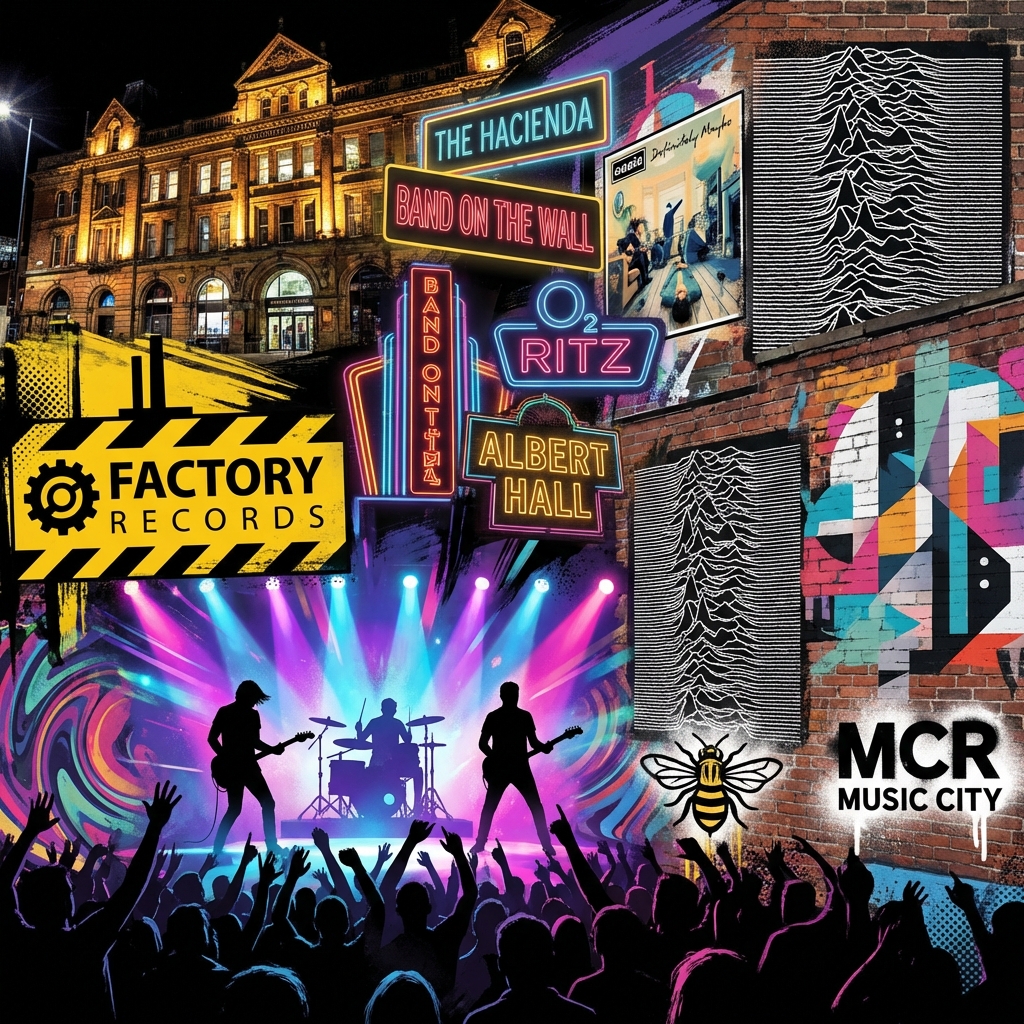
In 2026, Manchester's live music scene is thriving. Over 300 gigs happen weekly across the city, from massive arena tours to tiny basement shows. The Warehouse Project sells out 16,000-capacity nights in minutes. Independent venues like Gorilla and Night & Day Cafe nurture emerging talent. And the ghost of The Haçienda—arguably the world's most famous nightclub—still haunts the city's DNA.
This is your complete guide to Manchester's music scene: past, present, and how to experience it.
A Brief History: How Manchester Became Music City
The 1960s: The Beat Boom
Manchester's music story accelerates in the 1960s with The Hollies (formed 1962), Herman's Hermits (1964), and the Bee Gees (who spent formative years in Chorlton). These weren't world-changing artists, but they established Manchester as a music production hub with studios, labels, and live circuits.
More significant was the Twisted Wheel (1963-1971), a club on Brazennose Street that became the birthplace of Northern Soul. All-nighters featuring rare American soul imports created a fiercely loyal subculture that still thrives today. The Wheel proved Manchester audiences craved music beyond mainstream radio.
The 1970s: Punk's Northern Outpost
When punk exploded in 1976, Manchester embraced it ferociously. Buzzcocks (formed 1976) and The Fall (formed 1976, led by the late Mark E. Smith until 2018) defined Manchester punk's intellectual, art-school edge—less nihilistic than London, more cerebral and weird.
Rabid Records (1977) became the North's answer to independent labels, releasing Slaughter & the Dogs and Jilted John. The Electric Circus on Collyhurst Street hosted legendary punk gigs before closing in 1977, cementing Manchester's reputation as punk's second city.
But the real revolution started on June 4, 1976, when the Sex Pistols played the Lesser Free Trade Hall. Only 42 people attended, but they included Bernard Sumner, Peter Hook, Morrissey, and Mark E. Smith—future architects of Manchester's greatest bands. That gig's impact cannot be overstated: it detonated Manchester's post-punk scene.
The 1980s: Madchester, The Haçienda & Factory Records
The 1980s were Manchester's golden age. Three interconnected phenomena defined it:
1. Factory Records (1978-1992)
Founded by TV presenter Tony Wilson, producer Martin Hannett, and designer Peter Saville, Factory Records wasn't just a label—it was an ideology. Bands owned their masters, creativity trumped commerce, and graphic design mattered as much as music.
Factory's roster reads like a who's-who of greatness: Joy Division, New Order, A Certain Ratio, The Durutti Column, Happy Mondays. The label's aesthetic—stark, modernist, challenging—became synonymous with Manchester.
2. Joy Division → New Order
Joy Division (1976-1980) created dark, atmospheric post-punk that influenced everyone from U2 to Radiohead. Singer Ian Curtis's suicide in May 1980, aged 23, shocked the music world. The surviving members formed New Order, who fused post-punk with electronic dance music, creating timeless tracks like "Blue Monday" (1983, best-selling 12" single ever) and "Bizarre Love Triangle" (1986).
3. The Haçienda (1982-1997)
Factory Records' nightclub, The Haçienda, opened in May 1982 in a former yacht showroom. Initially struggling, it found its identity in acid house (1988-1989), becoming ground zero for rave culture. DJs like Mike Pickering and Graeme Park introduced ecstasy-fueled crowds to Chicago house and Detroit techno.
The Haçienda's influence was seismic: it proved nightclubs could be culturally significant, legitimized electronic dance music, and terrified the British establishment (leading to restrictive nightclub licensing). It closed in 1997 due to debt, gang violence, and changing tastes, but its legacy endures.
4. The Smiths (1982-1987)
Parallel to Factory, The Smiths—Morrissey (vocals), Johnny Marr (guitar), Andy Rourke (bass), Mike Joyce (drums)—created literate, melodic indie rock that defined 1980s alternative music. Albums like The Queen Is Dead (1986) remain canonical. Their dissolution in 1987 devastated fans but cemented legendary status.
5. The Stone Roses & Happy Mondays: "Madchester"
By the late 1980s, The Stone Roses (psychedelic indie-rock) and Happy Mondays (baggy, dance-influenced funk-rock) fused indie guitars with dance beats, creating the "Madchester" sound. The Second Summer of Love (1988-1989) saw Haçienda ravers and indie kids unite. The Roses' self-titled debut (1989) is considered one of Britain's greatest albums.
The 1990s: Britpop Dominance
Oasis exploded in 1994 with Definitely Maybe, the fastest-selling debut album in UK history. Brothers Noel and Liam Gallagher brought working-class Mancunian swagger, Beatles-influenced melodies, and monumental arrogance to global stages. Their rivalry with Blur defined Britpop, with Oasis representing Northern authenticity against Southern art-school pretension.
Oasis's Knebworth 1996 concerts (250,000 attendees over two nights) marked peak Britpop. Though they split acrimoniously in 2009, their influence persists—and reunion rumors never die.
The 2000s-2010s: Indie's Afterglow
Post-Britpop, Manchester produced Elbow (Mercury Prize 2008 for The Seldom Seen Kid), The Courteeners (local heroes with massive Northern following), I Am Kloot, Delphic, and Everything Everything.
The city's scene diversified: less dominated by one sound, more eclectic. The Warehouse Project (launched 2006) became Europe's premier electronic music series, hosting Carl Cox, Aphex Twin, and Bicep in massive warehouse spaces.
2020s: Genre Fluidity & Global Success
Today's Manchester defies easy categorization:
- The 1975: Global arena-pop-rock, genre-hopping, critically acclaimed
- Blossoms: Indie-pop with Northern charm, chart success
- Bugzy Malone: Grime/rap pioneer, Manchester's answer to London's scene
- Aitch: UK hip-hop star, multi-platinum singles
- Working Men's Club: Post-punk revival, synth-heavy
- Phoebe Green: Alt-pop rising star
Manchester has evolved from guitar-dominated to genre-diverse, reflecting modern music's fluidity.
The Venues: Where Music Happens
Legendary (Closed But Not Forgotten)
The Haçienda
Now luxury apartments (Haçienda Apartments, Whitworth Street West). A commemorative plaque marks the spot. Music fans still make pilgrimages.
International 1 & 2
Demolished. Hosted early Oasis, Stone Roses. Lives in bootleg recordings.
The Boardwalk
Closed 2010. Hosted Oasis's first gig (1991). Now student flats, another plaque.
Current Essential Venues
Manchester Arena (AO Arena) – 21,000 capacity
UK's largest indoor arena (until Co-op Live opens nearby in 2024). Hosts massive tours: Taylor Swift, Harry Styles, Coldplay. Tragically bombed in 2017 (22 killed); reopened September 2017 with resilience.
O2 Victoria Warehouse – 10,000 capacity
Electronic music palace. Hosts Warehouse Project (October-January, weekly club nights with world-class DJs). Former industrial warehouse, incredible acoustics.
O2 Apollo Manchester – 3,500 capacity
Art Deco beauty (opened 1938 as cinema). Mid-size touring acts: Fontaines D.C., Arlo Parks, Nothing But Thieves. Balcony seating, stunning interior.
Albert Hall – 2,000 capacity
Converted Wesleyan chapel (1910), one of UK's most beautiful venues. Stained glass, ornate ceilings, incredible atmosphere. Diverse programming: Caribou, Jon Hopkins, Kamasi Washington.
Gorilla – 600 capacity
Northern Quarter staple. Great sound system, indie/alternative focus. Emerging acts and established names. Vegan food, craft beer, laid-back vibe.
Band on the Wall – 350 capacity
Since 1803 (rebuilt 2009). Jazz, world music, eclectic programming. Community-focused, legendary history. Hosts global artists and local talent.
Night & Day Cafe – 200 capacity
Tiny Northern Quarter venue. Breakthrough acts play here first (think Arctic Monkeys-small). Open late, always something on. Punk/indie/alternative focus.
The Deaf Institute – 400 capacity
Student favorite (near universities). Affordable gigs (£5-15), indie/rock/alternative. Two floors: venue downstairs, bar/cafe upstairs.
YES (The Pink Room) – 200 capacity
LGBTQ+-friendly, inclusive space. Pink aesthetic, eclectic programming (DJ nights, live bands, drag shows). Community hub.
Warehouse Project – Various spaces
Annual October-January series in massive warehouses (Store Street, Depot Mayfield). 16-week season, 4,000-16,000 capacity per night. Electronic music pilgrimage: Amelie Lens, Ben Böhmer, Peggy Gou.
Record Shops & Music Culture
Piccadilly Records (53 Oldham Street)
Indie institution since 1978. Vinyl paradise, knowledgeable staff, in-store signings. Genre-diverse: indie, electronic, jazz, hip-hop.
Eastern Bloc Records (5a Stevenson Square)
Dance/electronic specialist. Trusted by DJs, hosts label showcases.
Vinyl Revival (15 Hilton Street)
Second-hand vinyl, collectibles, obscure finds. Crate-digger's dream.
HMV Arndale (49 High Street)
Mainstream but massive. Hosts signings, convenient city-center location.
Music Tours & Heritage
Madchester Walking Tour
Guided 2-hour walks covering Factory Records, Haçienda site, band homes, gig venues. Book via Manchester Guided Tours.
Music Mile
Self-guided trail with plaques marking music landmarks: Lesser Free Trade Hall (Sex Pistols gig), Salford Lads Club (Smiths album cover location), etc.
The Smiths/Morrissey Tour
Fan-organized tours hitting Morrissey childhood home (Stretford), Salford Lads Club, Southern Cemetery (gravestone on The Queen Is Dead cover).
Factory Records Pilgrimage
Visit Haçienda apartments, FAC 51 plaque, Tony Wilson statue (outside HOME arts center), Strangeways (in Strangeways, Here We Come album).
Festivals & Events
Parklife (June, Heaton Park)
Manchester's biggest festival: 80,000 capacity, two days, electronic/hip-hop/indie. Hosts: Tyler, The Creator, Disclosure, Skepta, Fred Again.
Manchester International Festival (July, biennial)
Cutting-edge arts festival (not exclusively music). Commissioned new works from major artists. Next: 2025, 2027.
Sounds from the Other City (May, Salford)
Independent festival across Salford venues. Emerging artists, intimate shows, affordable (£20-30 day tickets).
Dot to Dot Festival (May)
Multi-venue city crawl. One wristband, 20+ venues, 100+ artists. Discover new music marathon.
Warehouse Project (October-January)
16-week season, UK's premier club series. Saturday nights, massive lineups, essential for electronic music fans.
The Modern Scene (2024-2026)
Post-COVID Recovery
Gig attendance rebounded strongly. Smaller venues struggled with rising costs, but community support (crowdfunding, memberships) saved many.
Rising Local Acts (2025-2026)
- Working Men's Club: Synth-punk, explosive live shows
- Phoebe Green: Alt-pop, major label backing
- Porridge Radio (Brighton-based but Manchester-adopted): Post-punk intensity
- Lime Garden: Indie-rock, BBC Radio 1 support
Challenges
- Ticket Prices: Arena shows £80-150 (inflation, Ticketmaster fees)
- Venue Closures: Rising rents threaten small venues
- Gentrification: Northern Quarter losing grit, becoming expensive
Positives
- Diversity: More women, LGBTQ+, and BIPOC artists on lineups
- Genre Fluidity: Less gatekeeping, more cross-pollination
- Community Support: Fans rally to save venues, attend local gigs
How to Experience Manchester's Music Scene
For First-Time Visitors
Friday Night Plan:
- Pre-gig dinner in Northern Quarter (Mackie Mayor food hall or Bundobust vegan Indian)
- Gig at Gorilla or Band on the Wall (check listings on Songkick)
- Post-show drinks at Port Street Beer House (craft beer) or Peveril of the Peak (traditional pub)
- Late-night clubbing at YES or The Ritz (if still open)
Saturday Afternoon:
- Browse Piccadilly Records
- Coffee at North Tea Power (Northern Quarter)
- Walk the Music Mile (self-guided)
- Matinee show at Albert Hall or cinema at HOME
Transport: Metrolink trams (easy), buses (extensive), walking (Northern Quarter compact)
For Music Obsessives
Monday-Thursday Gigs:
Smaller venues host emerging acts midweek. Tickets £5-15. Night & Day, Deaf Institute, Jimmy's (Liverpool Road).
Record Shopping Route:
Piccadilly Records → Vinyl Revival → Eastern Bloc Records → HMV (half-day adventure)
Music Trivia:
- Haçienda site: Whitworth Street West (now apartments)
- Tony Wilson statue: Outside HOME, First Street
- Salford Lads Club: St Ignatius Walk, Salford (Smiths pilgrimage)
For Budget-Conscious Fans
Free/Cheap:
- Open mic nights: Night & Day (Thursdays), The Castle Hotel (Wednesdays)
- Student gigs: Deaf Institute, Student unions (£5-10)
- Free festivals: Parklife warm-up shows, in-store performances at Piccadilly Records
Membership Schemes:
- Band on the Wall Friends (£40/year): Discount tickets, priority booking
- Albert Hall membership (similar perks)
Community & Connection
Facebook Groups:
- Manchester Gig Guide (20,000+ members sharing listings)
- Manchester Music Scene (news, discussions)
- Warehouse Project Tickets (resale, meetups)
Meetup Groups:
- Manchester Music Lovers (group gig attendance)
- Indie Gig Buddies (find concert companions)
Instagram:
- @manchestergigs (daily event updates)
- @northernquarter (venue/culture photos)
Reddit:
- r/manchester (weekly "what's on" threads)
References & Resources
Websites
- manchestereveningnews.co.uk/whats-on (comprehensive listings)
- creativetourist.com/manchester (curated cultural events)
- songkick.com (personalized gig alerts)
- ra.co (Resident Advisor - electronic music focus)
Books
- 24 Hour Party People by Tony Wilson (Factory Records memoir)
- Unknown Pleasures by Peter Hook (Joy Division bassist's account)
- The Haçienda: How Not to Run a Club by Peter Hook
- Mad for It: From Blackpool to Barcelona: Football's Greatest Rivalries (includes Oasis/Blur)
Films/Documentaries
- 24 Hour Party People (2002, starring Steve Coogan as Tony Wilson)
- Control (2007, Ian Curtis/Joy Division biopic)
- Oasis: Supersonic (2016, documentary)
- Joy Division (2007, Grant Gee documentary)
Podcasts
- The Haçienda Podcast (stories from the legendary club)
- Manchester Music (local scene coverage)
Venue Websites
- alberthallmanchester.com
- bandonthewall.org
- o2apollomanchester.co.uk
- warehouseproject.com
- gorillamanchester.com
The Bottom Line
Manchester's music scene isn't history—it's living, breathing, evolving. Yes, The Haçienda is gone. Yes, Oasis split. Yes, the Madchester era ended. But music remains central to Manchester's identity.
Every weekend, thousands gather in sweaty venues to experience live music—the communal, unpredictable, irreplaceable thrill of being in a room with strangers, all feeling the same beat.
Whether you're chasing legendary ghosts or discovering tomorrow's stars, Manchester delivers. The stages are waiting. The crowd is ready. The music plays on.
See you in the pit.
Theodore Charles
Culture & Entertainment EditorAn expert contributor to the Social for Life community, sharing insights on music and beyond.
Northern Rhythm: The Ultimate 2026 Festival Guide