
Coventry: Rising from the Ashes

Coventry: Rising from the Ashes
On November 14, 1940, the German Luftwaffe dropped 500+ tons of explosives on Coventry in 10 hours. The medieval cathedral burned. 568 people died. 60,000+ buildings destroyed or damaged. The Germans invented a word for total aerial destruction: "Koventrieren"—to Coventrate.
Coventry's response? Build new cathedral alongside bombed ruins, dedicate it to international reconciliation, refuse to let destruction define the city. Then invent 2-Tone music (multiracial ska-punk fusion), become UK City of Culture 2021, prove that cities can be reborn.
The statistics: 345,000 residents, £172 million City of Culture investment, two universities (38,000+ students), birthplace of British motor industry, home to The Specials (2-Tone pioneers). But numbers miss Coventry's essence: resilience, reconciliation, working-class creativity, refusal to be defined by tragedy.
This guide explores Coventry beyond stereotypes: cathedral's destruction and rebirth story, 2-Tone music revolution, automotive heritage, City of Culture legacy, and why this overlooked Midlands city matters.
The Cathedral: Destruction, Rebirth, Reconciliation
November 14, 1940: Coventry Blitz
Nazi Germany's Operation Moonlight Sonata targeted Coventry's medieval center and war industries. 449 German bombers dropped 500+ tons of explosives and 30,000+ incendiaries in 10 hours.
The destruction:
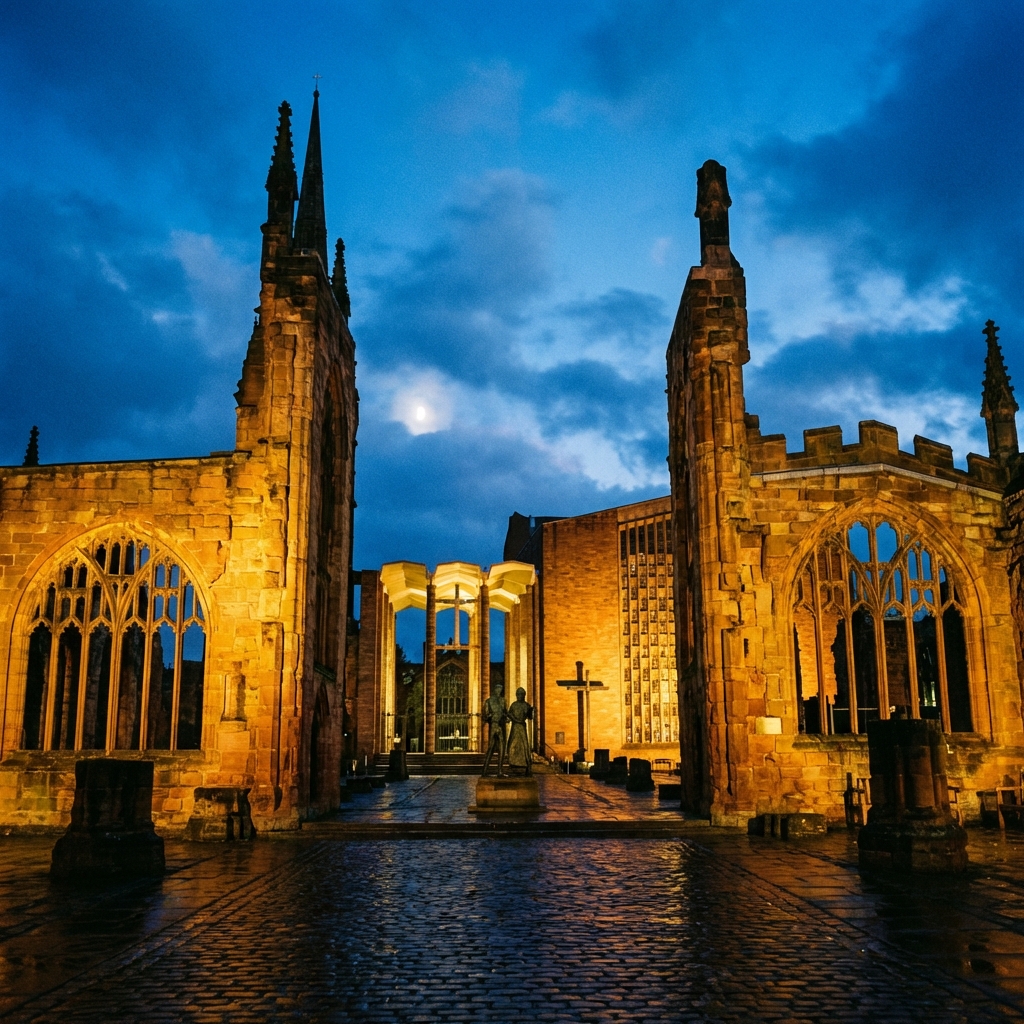
- St Michael's Cathedral (built 1373) gutted by fire
- Medieval city center destroyed
- 568 civilians killed, 863 injured
- 4,330 homes destroyed, 60% of buildings damaged
- Factories burning, city ablaze visible 100+ miles away
Morning after: Provost Richard Howard stood in smoldering cathedral ruins, picked up three medieval nails from charred roof timbers, fashioned them into Cross of Nails. Behind altar, wrote in charcoal: "Father Forgive"—not "Father forgive them," but inclusive forgiveness acknowledging all sides' suffering.
Basil Spence's New Cathedral (1962)
Rather than rebuild replica, Coventry commissioned modernist cathedral (dedication 1962) alongside ruins. Architect Basil Spence created controversial but remarkable building:
- Old ruins preserved as open-air memorial, war garden
- New cathedral at perpendicular angle, connected but distinct
- Graham Sutherland tapestry: 75-foot high Christ in Glory (largest in world)
- John Piper baptistery window: Abstract stained glass, vibrant colors
- Jacob Epstein sculpture: St Michael defeating devil
- Charred cross from 1940 Blitz, still displayed
The juxtaposition—medieval ruins + modernist masterpiece—creates profound statement about destruction, hope, renewal.
International Ministry of Reconciliation
Coventry Cathedral's mission: reconciliation, not revenge. Post-WWII, cathedral established partnerships with:
- Dresden (also firebombed, 1945)
- Kiel, Berlin (German cities)
- Stalingrad/Volgograd (Soviet city)
- Belfast (Northern Ireland Troubles reconciliation)
Cross of Nails symbol now used by 200+ reconciliation centers worldwide. Coventry's response to destruction: forgiveness and peace-building.
2-Tone Music: Multiracial Revolution
The Specials: Inventing 2-Tone
1977: Coventry musician Jerry Dammers formed The Specials—Black and white musicians mixing Jamaican ska with punk energy. The result: 2-Tone, genre-and-movement defining late-1970s/early-1980s Britain.
Why "2-Tone"?
- Musical fusion: Ska + punk + rocksteady
- Racial integration: Black-and-white checkered imagery, multiracial bands
- Political stance: Anti-racism message during National Front rise
- Working-class voice: Unemployment, Thatcher-era Britain, urban decay
The Specials' Impact
Key songs:
- "Ghost Town" (1981): UK #1, soundtrack to urban riots, dead shopping centers, Thatcher's Britain
- "Too Much Too Young" (1980): Live EP, UK #1
- "A Message to You, Rudy" (1979): Ska classic
Visual identity: Walt Jabsco (man in suit, pork pie hat, shades)—2-Tone's iconic logo, still recognizable today.
2-Tone Village & Other Bands
2-Tone Records (Dammers' label) launched:
- The Selecter (Coventry, female-fronted ska)
- The Beat (Birmingham, but 2-Tone affiliated)
- Madness (London, popularized 2-Tone to mainstream)
2-Tone Village (Far Gosford Street): Music quarter, venues, Specials mural, 2-Tone heritage walking trail. Coventry celebrates this legacy—working-class multiracial creativity that changed British music.
City of Culture 2021: Cultural Renaissance
The Year That Changed Coventry
Winning UK City of Culture 2021 was transformative (albeit COVID-disrupted):
Investment:
- £172 million total investment
- 5,500+ events across 12 months
- 2.9 million attendances (despite COVID restrictions)
- £100 million+ economic impact
Signature events:
- Coventry Moves: Mass dance performances, community participation
- Belgrade Theatre: Year-round programming
- CV Freestyles: Hip-hop, grime, young artists platform
- UK in Bloom: 600,000 wildflowers across city
- Peace exhibition: Cathedral's reconciliation work showcased
Lasting Legacy
City of Culture didn't end in 2021:
- Confidence boost: Coventry taken seriously culturally
- Infrastructure investment: New performance spaces, renovated venues
- Tourism sustained: Visitor numbers remained elevated
- Cultural programming ongoing: Events calendar remains ambitious
Automotive Heritage: Motor City
Birthplace of British Motor Industry
Coventry was Britain's first motor city:
- 1896: Daimler Motor Company established (Britain's first car manufacturer)
- 1900s-1960s: 100+ car manufacturers operated from Coventry
- Jaguar, Rover, Standard, Triumph—all Coventry brands
- 1960s peak: 40,000+ employed in car manufacturing
Decline (1970s-1980s): Imports, factory closures, unemployment. But automotive DNA persists.
Coventry Transport Museum
FREE admission to world's largest collection of British road transport:
- 300+ vehicles: Cars, motorcycles, bicycles, commercial
- Speed Record Gallery: Thrust2 (633mph), ThrustSSC (763mph, land speed records)
- Jaguar history: E-Type, XJ, racing heritage
- Interactive exhibits: Kids love it, adults appreciate history
Essential visit for car enthusiasts—Coventry's automotive pride on display.
Lady Godiva: Medieval Legend
11th Century Naked Protest (Allegedly)
Coventry's most famous legend: Lady Godiva rode naked through streets (11th century) to persuade husband Earl Leofric to reduce oppressive taxes. He agreed.
Historically dubious, but Coventry embraces the myth:
- Godiva statue: Cathedral Quarter, bronze on horseback
- Godiva Festival: Annual music festival (FREE)
- Godiva Chocolates: Belgian brand uses her name/image
The legend represents standing up to authority, sacrifice for community—themes resonating in working-class Coventry.
University City & Student Culture
Two Universities, 38,000 Students
University of Warwick (founded 1965):
- Russell Group, top 10 UK university
- 28,000+ students
- Business school globally renowned
- Campus southwest of city (technically Warwickshire, not Coventry—but functionally linked)
Coventry University (founded 1992, history to 1843):
- 10,000+ students
- City-center campus
- Engineering, design, automotive focus
Students bring £300 million+ annually, keep city young, diverse.
Getting There & Around
Train: Coventry Station (1 hour from London, 20 mins from Birmingham, 30 mins from Leicester)
Road: M6, M69, A45
Local transport:
- Buses: Good network, day ticket £4.50
- Walking: Compact city center, Cathedral Quarter walkable
- Cycling: Flat city, improving infrastructure
Practical Tips
- Cathedral: FREE entry (donations), allow 1-2 hours, stunning architecture
- Transport Museum: FREE, excellent for families
- 2-Tone Trail: Walking tour, Specials murals, music heritage
- Budget: Affordable city, accommodation/food cheaper than Birmingham/London
- Avoid: Ring road notorious for confusing drivers
- Student timing: Avoid September/January (accommodation tight)
Why Coventry Matters
Coventry challenges British narratives about war, race, working-class culture. Rather than nationalist triumphalism, Coventry's cathedral preaches reconciliation. Rather than racial division, 2-Tone celebrated multiracial unity. Rather than accepting decline, City of Culture 2021 sparked renaissance.
What makes Coventry essential? Cathedral's destruction-and-rebirth story (most profound WWII memorial in UK), 2-Tone music giving voice to multiracial working class, automotive heritage preserving British manufacturing pride, and refusal to be defined by tragedy—choosing forgiveness over bitterness, creativity over despair.
Coventry isn't pretty heritage city or polished cultural destination. It's real: working city that survived bombing, industrial collapse, economic devastation through resilience, creativity, internationalism.
Visit for the cathedral. Stay for 2-Tone history, automotive pride, understanding how cities rise from ashes.
References & Resources
Essential websites:
Cathedral & Heritage:
Music & Culture:
Transport:
Ruth Naomi
Community & Lifestyle LeadRuth is passionate about uncovering the stories that connect communities and celebrate local culture.