
Derby: Silk Mills and Peak District Gateway

Derby: Silk Mills and Peak District Gateway
Derby doesn't shout about its achievements—but they're quietly extraordinary. This East Midlands city built the world's first factory (1721), sparked the Industrial Revolution, manufactured Rolls-Royce engines that powered Spitfires and 747s, and sits 15 minutes from Peak District National Park—Britain's most-visited national park.
The statistics: 261,000 residents, £700+ million Rolls-Royce investment (ongoing), UNESCO World Heritage Site (Derwent Valley Mills), University of Derby (15,000 students), gateway to 13 million annual Peak District visitors. But numbers miss Derby's essence: quiet competence, engineering excellence, unpretentious charm, city that changed the world without seeking credit.
Derby succeeds by staying authentic. No glossy rebranding, no forced regeneration—just steady investment in heritage, community, engineering prowess that employs thousands. This is Britain's most underappreciated city—overshadowed by Nottingham, Birmingham, Manchester, but quietly excelling.
This guide explores Derby's hidden strengths: Industrial Revolution birthplace, Rolls-Royce's aerospace dominance, Joseph Wright's paintings capturing enlightenment, Cathedral Quarter's charm, and Peak District access making Derby ideal base.
The First Factory: Birthplace of Industrial Revolution
Lombe's Silk Mill (1721)
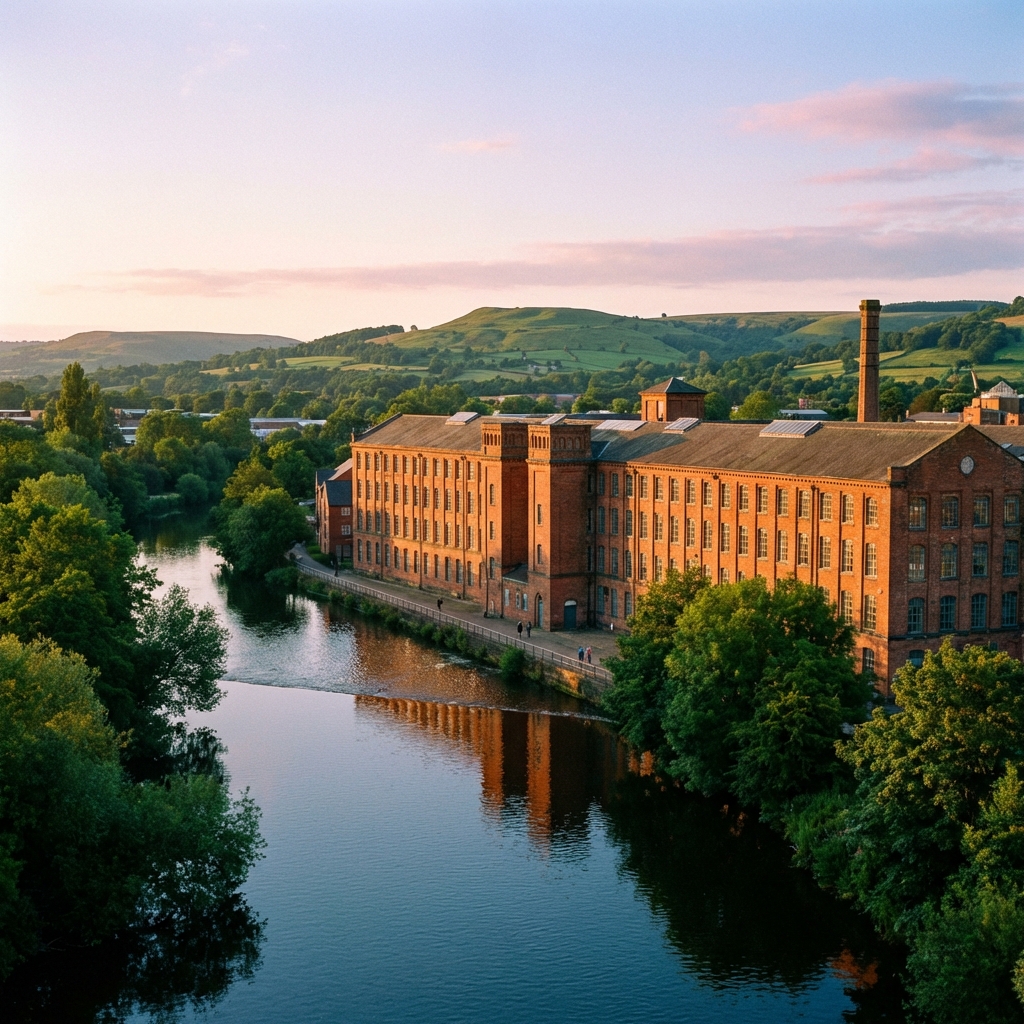
On an island in the River Derwent stands a brick building that changed human history: Lombe's Silk Mill, widely considered the world's first factory.
What made it revolutionary?
- Water-powered machinery (not human/animal power)
- Centralized production (not cottage industry)
- 300+ workers operating machines in single building
- Continuous production (shift work, 24-hour operation)
- Division of labor: Each worker specialized task
1718-1721: John Lombe (allegedly) stole Italian silk-throwing secrets, built machinery replicating Italian mills, powered it with River Derwent's flow. The silk mill employed 300 workers by 1730s—unprecedented concentration of industrial labor.
This model—centralized, mechanized, continuous production—became template for all future factories. The Industrial Revolution began here.
Derby Silk Mill (Museum of Making)
Reopened 2021 as Museum of Making, FREE entry:
- Factory building preserved: See original structure
- Interactive exhibits: How silk-throwing machines worked
- Industrial history: Derby's engineering legacy
- Maker spaces: Modern manufacturing, 3D printing, workshops
- Rolls-Royce gallery: Aero-engine heritage
The juxtaposition—world's first factory + cutting-edge maker tech—shows Derby's continuous industrial evolution.
Derwent Valley Mills UNESCO World Heritage Site
2001: 15-mile stretch of Derwent Valley (Derby to Matlock) designated UNESCO World Heritage Site. Includes:
- Lombe's Silk Mill (Derby)
- Cromford Mill (Richard Arkwright's water-powered cotton mill, 1771)
- Masson Mill, Belper Mills: Additional pioneering factories
- Workers' housing: Early industrial settlements
This valley = cradle of Industrial Revolution, where factory system was invented, perfected, replicated globally.
Rolls-Royce: Engineering Excellence Since 1908
From Cars to Aero-Engines
1908: Henry Royce moved production from Manchester to Derby—cheaper land, skilled workforce, central location. Initially built cars (luxury automobiles).
WWI (1914-1918): Switched to aero-engines. Eagle engine powered RAF planes.
WWII (1939-1945): Merlin engine powered Spitfire and Hurricane fighters—Britain's aerial defense. Derby factories worked 24/7, city targeted by German bombers (they knew Rolls-Royce importance).
Post-war: Jet engines—Avon, Dart, Trent became industry standards.
Modern Rolls-Royce
Today, Rolls-Royce (split from car division 1973—cars now BMW-owned) is Derby's largest employer:
- 14,000+ Derby employees
- Aerospace engines: Power Boeing 787, Airbus A350, 50+ aircraft types
- £1+ billion annual investment: R&D, manufacturing
- Civil aerospace leader: Trent family engines dominate wide-body aircraft market
Derby's economy revolves around Rolls-Royce—engineering jobs, supply chain, apprenticeships maintaining skills base.
Rolls-Royce Heritage Trust
FREE museum (advance booking required):
- Historic engines: Merlin, Dart, early jets
- Spitfire connection: See actual Merlin engine
- Engineering evolution: From piston to jet to turbofan
- Test facilities tour (limited availability)
Cathedral Quarter: Historic Heart
Derby Cathedral
Derby Cathedral (All Saints, designated cathedral 1927):
- 16th century tower: 212 feet, Derby landmark
- 18th century rebuilding: James Gibbs (architect of St Martin-in-the-Fields, London)
- Bess of Hardwick's tomb: Elizabethan noblewoman, extraordinary life
- Wrought-iron screen: Robert Bakewell masterpiece (1730s)
FREE entry, often overlooked but architecturally significant.
Historic Streets & Independent Shops
Cathedral Quarter preserves Georgian/Victorian streets:
- Sadler Gate: Cobbled street, independent boutiques, cafes
- Iron Gate: Pedestrianized, craft shops, jewelry
- St Peter's Quarter: Markets (general + farmers), food hall
Derby resists chain-store homogenization—independent businesses thrive in historic quarter.
Joseph Wright: Painter of Enlightenment
Derby's Greatest Artist
Joseph Wright of Derby (1734-1797) never left his hometown, but became one of most important 18th-century British painters.
What made Wright special?
- Industrial subjects: First major artist to paint factories, scientific experiments, machines
- Candlelit scenes: Dramatic chiaroscuro (light/dark contrast)
- Enlightenment themes: Science, reason, progress
Famous works:
- "An Experiment on a Bird in the Air Pump" (1768): Scientific demonstration, moral complexity
- "A Philosopher Lecturing on the Orrery": Astronomy lesson by candlelight
- "The Iron Forge": Working men, industrial labor depicted with dignity
Derby Museum & Art Gallery
FREE admission, world's largest Joseph Wright collection:
- 30+ Wright paintings: See originals of famous works
- Industrial Revolution context: Wright documented Derby's transformation
- Other collections: Ceramics (Derby Crown), natural history, archaeology
Essential visit—Wright's paintings are profoundly beautiful, capturing moment when science/industry began changing human life.
Peak District Gateway: 15 Minutes to National Park
Perfect Base for Exploration
Derby sits on eastern edge of Peak District National Park (Britain's first national park, 1951):
How close?
- 15 mins drive: First villages (Duffield, Belper)
- 25 mins: Matlock, Cromford, proper peaks
- 35 mins: Bakewell, Chatsworth House
- 45 mins: Castleton, Edale, serious hiking
Why Derby beats nearby cities as Peak District base?
- Cheaper accommodation than Buxton/Bakewell tourist towns
- Better public transport (bus routes into Peak District)
- City amenities: Shops, restaurants, entertainment
- Less touristy: Authentic local life
Peak District Highlights from Derby
Chatsworth House (25 mins): "Palace of the Peak," stately home, gardens
Heights of Abraham (25 mins): Cable car, caverns, views
Bakewell (30 mins): Market town, Bakewell pudding (not tart!)
Dovedale (35 mins): Limestone valley, stepping stones, riverside walks
Hiking: Monsal Trail (converted railway, 8.5 miles), Pennine Way access
Derby County FC: Pride Park
The Rams
Derby County FC ("The Rams") plays at Pride Park Stadium (33,000 capacity):
- Founded 1884: One of England's oldest clubs
- League championships: 1972, 1975 under Brian Clough
- FA Cup finals: 1946 finalists
- Recent struggles: Financial issues, administration, relegations
Derby-Nottingham rivalry (Brian Clough connection) is East Midlands' fiercest.
Getting There & Around
Train: Derby Station (1.5 hours from London, 30 mins from Nottingham, 45 mins from Birmingham)
Road: M1 (Junction 25), A38, A52
Peak District access: Regular buses to Matlock, Bakewell, Ashbourne
Local transport:
- Buses: City network, day ticket £4.50
- Walking: Compact city center
- Cycling: Flat city, improving infrastructure
Practical Tips
- Museum of Making: FREE, excellent, allow 2-3 hours
- Joseph Wright paintings: Derby Museum FREE, world-class art
- Rolls-Royce Heritage Trust: FREE but book ahead (limited spaces)
- Peak District day trips: Derby excellent base, cheaper than Bakewell/Buxton
- Budget: Very affordable city, good value accommodation
- Cathedral Quarter: Independent shops, farmers' market (Saturday)
Why Derby Matters
Derby challenges assumptions about "successful" cities. It doesn't have Manchester's swagger or Birmingham's size or Nottingham's student energy. But Derby has substance: birthplace of factory system that transformed human civilization, Rolls-Royce excellence employing thousands in high-skill jobs, UNESCO World Heritage Site, gateway to Britain's most-visited national park.
What makes Derby essential? Quiet competence—city that sparked Industrial Revolution without bragging, manufactures engines powering half the world's wide-body aircraft, preserves Joseph Wright's Enlightenment masterpieces, and offers Peak District access without tourist-town prices.
Derby doesn't seek validation or chase trends. It works: manufacturing excellence, heritage preservation, community cohesion, unpretentious charm. In age of rebranding and regeneration, Derby's authenticity refreshes.
Visit for Industrial Revolution history, Rolls-Royce engineering, Joseph Wright art. Stay because Derby reminds you that substance matters more than style.
References & Resources
Essential websites:
Museums & Heritage:
- Museum of Making: World's first factory (FREE)
- Derby Museum & Art Gallery: Joseph Wright (FREE)
- Rolls-Royce Heritage Trust (FREE, book ahead)
- Derwent Valley Mills: UNESCO World Heritage Site
Peak District:
Football:
Ruth Naomi
Community & Lifestyle LeadRuth is passionate about uncovering the stories that connect communities and celebrate local culture.