

Newcastle & Gateshead: Twin Cities, Shared Culture Across the Tyne

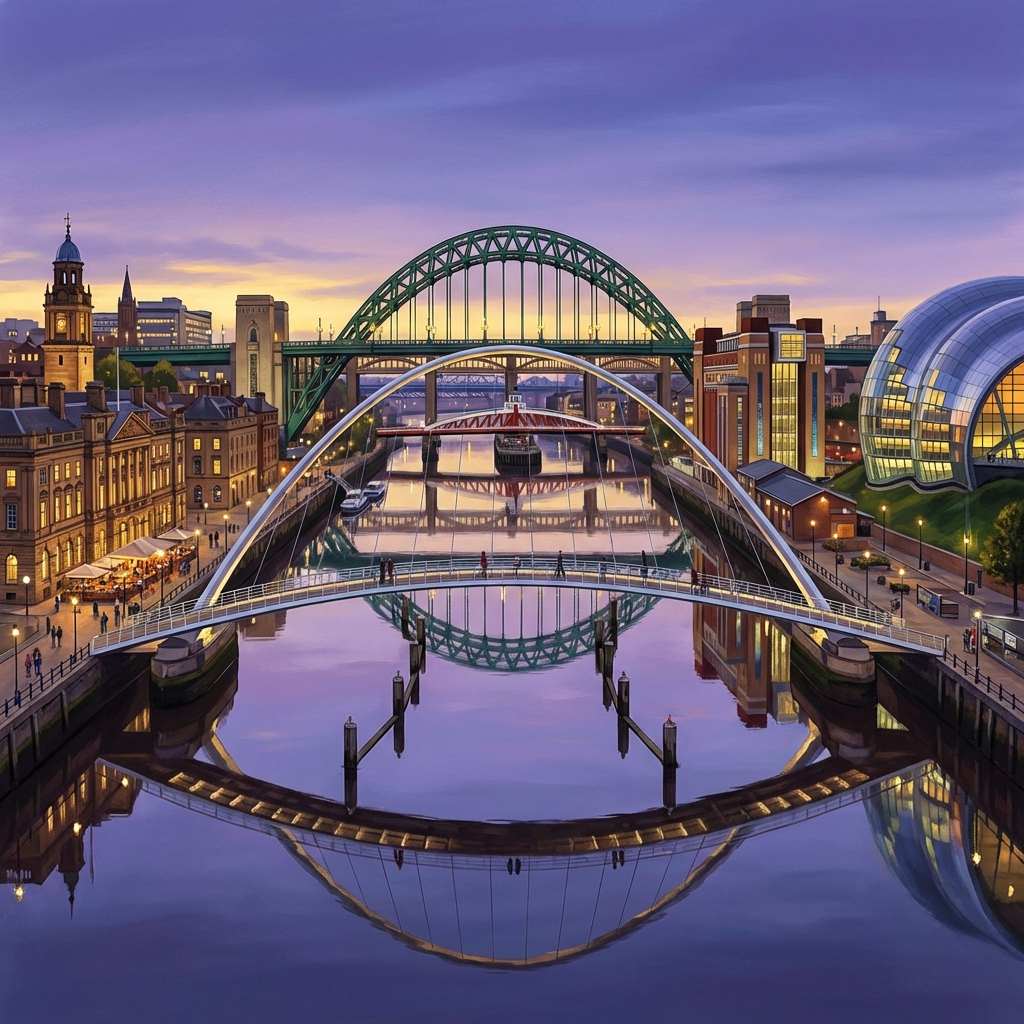
Newcastle & Gateshead: Twin Cities, Shared Culture Across the Tyne
Stand on the Gateshead Millennium Bridge at sunset, watching it tilt to let boats pass beneath. To your left: Newcastle's historic quayside, Victorian buildings, lively bars. To your right: Gateshead's modern skyline—BALTIC Centre's industrial bulk, The Sage's glass curves reflecting river light. Seven bridges span the River Tyne, each connecting not just banks but two cities functioning as one cultural organism.
This partnership works. Newcastle brings historic swagger, nightlife energy, commercial might. Gateshead contributes contemporary arts, architectural ambition, quieter charm. Together, they created NewcastleGateshead—a joint brand marketing twin cities as single destination. The strategy succeeded: cultural tourism generates £1.7 billion annually, the creative sector employs 15,000+ people, and the Quayside transformed from derelict wasteland to must-visit cultural corridor.
This guide explores both cities, their shared Quayside, iconic bridges, world-class venues, and why this overlooked pairing deserves attention.
From Coal to Culture
Industrial Heritage
1800s-1900s: Newcastle and Gateshead meant coal, shipbuilding, engineering. Mines extracted coal, Tyne shipyards built vessels, heavy industry dominated. The Tyne Bridge (1928)—green steel arch, postcard icon—symbolized regional pride and engineering prowess.
Working-class communities thrived; prosperity flowed from industrial might.
Post-War Decline
1970s-1980s: Industry collapsed. Mines closed, shipyards shut, unemployment devastated communities. The Tyne became polluted, quaysides derelict, buildings abandoned. Economic depression scarred the region.
Cultural Awakening (1990s-2000s)
Visionary investment turned crisis into opportunity:
River Cleanup (1990s): Tyne transformed from polluted industrial channel to clean waterway supporting salmon, leisure boats.
BALTIC Centre for Contemporary Art (2002): Former flour mill (1950) converted to art gallery—dramatic intervention signaling cultural ambition.
Gateshead Millennium Bridge (2001): Tilting footbridge (world's first) connects Newcastle/Gateshead—engineering spectacle + functional link.
The Sage Gateshead (2004): Norman Foster-designed concert hall—glass/steel curves, acoustically perfect, architectural landmark.
NewcastleGateshead Initiative: Joint tourism marketing—two cities, one brand.
Modern Success (2010s-2026)
Great Exhibition of the North (2018): Government-backed celebration (80 days, 176 events, 3.9 million visits)—showcased regional creativity.
Continued Investment: Public art, festivals, venue upgrades maintain momentum. Creative sector resilient despite austerity.
The Quayside: Cultural Corridor
Seven Bridges
The Tyne's seven bridges define the skyline—walking/photographing them is essential experience.
Tyne Bridge (1928)
Green steel arch, most iconic, 162m span. Symbol of Newcastle/Gateshead partnership.
Gateshead Millennium Bridge (2001)
Tilting footbridge: "Blinking Eye" design rotates to allow boats through. Engineering marvel, pedestrians/cyclists only.
High Level Bridge (1849)
Oldest, two-level (road above, Metro below), Victorian engineering genius.
Swing Bridge (1876)
Rotates horizontally to open shipping channel—occasional demonstrations.
King Edward VII Bridge (1906)
Railway bridge, industrial elegance.
Queen Elizabeth II Bridge (1981)
Modern road bridge, practical rather than picturesque.
Redheugh Bridge (1983)
Road bridge, completes seven.
Bridge Walk: Self-guided tour following riverbanks, photographing all seven. Allow 2-3 hours.
Quayside Transformation
1980s: Derelict wharves, pollution, abandonment.
2000s: Cleaned river, pedestrianized quaysides, public art installations, restaurants/bars opened.
2020s: Vibrant cultural/leisure destination. Sunday Quayside Market (crafts, food, buskers), riverside dining, events.
Major Cultural Venues
BALTIC Centre for Contemporary Art (Gateshead)
Location: South Shore Road, Gateshead NE8 3BA
Building: Former Joseph Rank's flour mill (1950), six-story concrete industrial monument
Admission: FREE
What: Cutting-edge contemporary art, rotating exhibitions
BALTIC doesn't have permanent collection—all exhibitions temporary. This allows curatorial flexibility, risk-taking. Shows feature established (Tracy Emin, Antony Gormley) and emerging international artists.
Rooftop Restaurant: Stunning Tyne views, modern British menu, worth visiting independently of exhibitions.
Why It Matters: Signals Gateshead's cultural ambition, FREE access democratizes contemporary art.
Getting There: Gateshead Quayside, 5-min walk from Gateshead Millennium Bridge.
The Sage Gateshead
Location: St Mary's Square, Gateshead NE8 2JR
Architect: Norman Foster (2004)
Design: Three glass/steel curved shells housing concert halls
Acoustics: World-class, designed for classical/folk/jazz
Halls:
- Hall One (1,700 capacity): Royal Northern Sinfonia (resident orchestra), classical concerts
- Hall Two (400 capacity): Folk, jazz, world music
- Northern Rock Foundation Hall (165 capacity): Intimate performances
Programming: Classical, folk (strong Northeast tradition), jazz, world music. Family concerts, education programs, free foyer performances.
Why It Matters: Architectural icon, acoustically perfect, diverse programming beyond classical elitism.
Getting There: Gateshead Quayside, adjacent to BALTIC.
BALTIC 39 (Newcastle)
Location: 39 High Bridge, Newcastle NE1 1EW
What: Artist studios + public gallery
Focus: Emerging artists, experimental work
Admission: FREE exhibitions, workshops, talks
BALTIC 39 complements BALTIC Centre—nurtures next generation while BALTIC showcases established names.
Theatre & Performance
Newcastle Theatre Royal
Location: 100 Grey Street, Newcastle NE1 6BR
Built: 1837 (rebuilt 1901)
Capacity: 1,300
Architecture: Victorian ornate interior, gilded details, plush seating
Programming:
- Touring West End shows (Wicked, Les Misérables)
- Opera (Opera North visits)
- Ballet (Northern Ballet residencies)
- Royal Shakespeare Company: Annual residency, major productions
Tickets: £15-60 (balcony affordable, stalls expensive)
Why: Historic theatre, quality programming, best shows tour here.
Live Theatre
Location: Broad Chare, Newcastle NE1 3DQ
What: New writing, Northeastern voices, social issues
Capacity: 200 (intimate)
Community Focus: Youth theatre, local playwrights, accessible pricing
Alphabetti Theatre
Location: St James Boulevard, Newcastle NE1 4HP
Capacity: 50 (tiny!)
What: Experimental, fringe, pay-what-you-can
Ethos: Radical accessibility, emerging writers, risk-taking
Music Scene
Musical Heritage
Lindisfarne:
"Fog on the Tyne" (1971)—regional anthem, folk-rock, Newcastle identity.
Dire Straits:
Mark Knopfler (guitarist/singer) from Newcastle—Money for Nothing, Sultans of Swing.
Sting:
Born Wallsend (Newcastle suburb), The Police fame, solo success.
Maxi Jazz (Faithless):
Born Newcastle, "Insomnia" dance classic.
Current Venues
O2 City Hall Newcastle
Capacity: 2,000
What: Touring indie/rock/pop acts
The Cluny
Location: Ouseburn Valley (Newcastle's hidden cultural quarter)
What: Independent venue, folk/indie/alternative, intimate atmosphere
Think Tank
What: Underground music (techno, house), club nights
Wylam Brewery
What: Craft brewery + live music venue, relaxed vibe
Visual Arts
Laing Art Gallery (Newcastle)
Location: New Bridge Street, Newcastle NE1 8AG
Admission: FREE
Collection: British art 1600-present, John Martin collection (dramatic landscapes, apocalyptic visions), Pre-Raphaelites, 20th-century works
Temporary Exhibitions: Contemporary photography, local artists, touring shows.
Why: Quality collection, FREE, peaceful browsing.
Shipley Art Gallery (Gateshead)
Location: Prince Consort Road, Gateshead NE8 4JB
Admission: FREE
Focus: Contemporary craft, ceramics, decorative arts
Building: Beautiful Victorian villa, parkland setting
Public Art: The Angel & More
Angel of the North
Location: A1 roadside, Gateshead (5 miles south of city center)
Artist: Antony Gormley
Completed: 1998
Dimensions: 20m tall, 54m wingspan (wider than Boeing 757!)
Material: Rust-colored weathering steel
Icon Status: Defines Northeast visually—150,000 people pass daily (A1 traffic). Photographs, postcards, regional pride symbol.
Getting There: Bus 21, 22 from Gateshead (15 mins), or taxi (£10 from Newcastle).
Why Visit: Magnificent scale, dramatic landscape, cultural pilgrimage.
Other Public Art
Turbine: LED light installation, Gateshead Millennium Bridge
Nocturne: Riverside sculpture, Quayside
Ouseburn Valley Murals: Street art trail, industrial quarter
Ouseburn Valley: Newcastle's Hidden Quarter
Location: East of Newcastle city center, former industrial valley
History: Victorian warehouses, railway viaducts, decline → regeneration (2000s)
Current Use:
- Artist studios: 80+ creative businesses
- The Cluny: Music venue
- Seven Stories: National Centre for Children's Books (museum/gallery, £7.95)
- Tyne Bank Brewery: Craft beer taproom, tours
- Ouseburn Farm: City farm (FREE), community space, animals
Why Visit: Authentic creative quarter, gritty charm, independent venues, escape tourist crowds.
Getting There: 15-min walk from Newcastle center, or Bus 1, 12, 39, 40.
Festivals & Events
Newcastle/Gateshead EAT! Festival (May)
Food, live music, riverside location. Celebrates Northeast produce, chefs, culture.
The Late Shows (May)
Museums/galleries open till midnight, special events, performances. Cultural celebration weekend.
Great North Run (September)
World's largest half-marathon (60,000 runners). Newcastle to South Shields, Tyne Bridge start, spectacular atmosphere.
Winter Trail (November-January)
Light installations, public art, seasonal celebrations across both cities.
Nightlife & Geordie Culture
Party Reputation
Newcastle famous for nightlife—"Toon Army" (locals) party hard. Key areas:
Bigg Market: Traditional party zone (rowdy, loud, cheap drinks)
Diamond Strip: Upscale bars/clubs
Quayside: Sophisticated riverside dining/drinking
Geordie Identity
Accent: Distinctive, melodic, challenging for outsiders
Dialect: "Howay" (come on), "bonny" (beautiful), "canny" (good/quite)
Reputation: Friendly, warm, direct, working-class pride
Food & Drink
Northeastern Cuisine
Stottie Cake: Flat bread, dense, perfect for bacon sandwiches
Pease Pudding: Yellow split pea spread, accompanies ham
Pan Haggerty: Potato/onion/cheese bake, hearty
Greggs: National chain, Newcastle HQ since 1939 (sausage rolls, pasties, local pride)
Quayside Dining
21: Michelin-quality, riverside, fine dining (££££)
The Botanist: Cocktails, hanging gardens, relaxed
Pitcher & Piano: Chain but scenic Tyne views
Practical Guide
Getting There
Newcastle Central Station: London 3h, Edinburgh 1h30, Leeds 1h
Metro (Tyne & Wear): Light rail connects Newcastle, Gateshead, coast, airport (£2-4 journeys)
Walking: Newcastle compact (20-min city center to Quayside), Gateshead smaller
Recommended Itinerary
Day 1:
- Morning: BALTIC Centre (FREE, 2 hours)
- Lunch: Quayside (riverside restaurant)
- Afternoon: The Sage concert (check schedule) OR Laing Art Gallery (FREE)
- Evening: Quayside dinner/drinks
Day 2:
- Morning: Angel of the North (bus 21/22, 1 hour round-trip + viewing)
- Afternoon: Seven Stories (£7.95, National Children's Books Centre) OR Ouseburn Valley exploration
- Evening: Theatre Royal show (£15-40)
Day 3:
- Morning: Bridge Walk (self-guided, 2-3 hours photographing all seven)
- Afternoon: Shipley Art Gallery (FREE, Gateshead)
- Evening: Newcastle nightlife or Cluny gig
Accessibility
- Most venues wheelchair accessible
- Metro system fully accessible
- Assistance at theatres/galleries
- Quayside largely flat, easy walking
Why Twin Cities Work
Complementary Strengths
Newcastle: Historic, commercial, nightlife, shopping
Gateshead: Arts-focused, quieter, residential, ambitious architecture
Together: Greater than sum of parts.
Shared Identity
Tyne bridges physically + symbolically unite. Residents identify as Northeast, not just Newcastle/Gateshead.
NewcastleGateshead brand markets jointly—tourism, events, cultural programming coordinated.
Economic Impact
Cultural tourism: £1.7 billion annually
Creative sector: 15,000+ jobs
Events draw national/international visitors
Community & Connection
Online
- r/NewcastleUponTyne (Reddit): 60,000+ members, local insights
- The Chronicle (chroniclelive.co.uk): Local news, culture listings
- NewcastleGateshead.com: Official tourism site
Meetups
- Newcastle Creative Network: Monthly socials, all creatives
- Ouseburn Trust: Community events, volunteering opportunities
References
Essential Websites
- newcastlegateshead.com (official tourism)
- balticmill.com
- thesagegateshead.com
- laingartgallery.org.uk
- theatreroyal.co.uk
Books
- Get Carter by Ted Lewis (crime novel, Newcastle setting, gritty 1970s)
- Our Friends in the North (BBC drama captures Northeast identity)
- The Angel of the North by Antony Gormley (artist's vision)
Films/TV
- Get Carter (1971, Michael Caine): Iconic Newcastle noir
- Auf Wiedersehen, Pet (TV series): Geordie builders, humor, identity
- I, Daniel Blake (2016, Ken Loach): Newcastle setting, social realism
The Bottom Line
Newcastle and Gateshead prove collaboration works. Two cities, separated by a river, united by culture—created something neither could achieve alone. The Quayside transformed from industrial decay to vibrant cultural corridor. BALTIC and The Sage signal architectural ambition. The Angel of the North watches over it all, rust-colored guardian of regional pride.
Visit for bridges, stay for unexpected cultural richness. The Northeast rewards attention.
See you on the Tyne.
Ruth Naomi
Community & Lifestyle LeadAn expert contributor to the Social for Life community, sharing insights on culture and beyond.