
The Science of the Cocktail: Chemistry in Your Glass

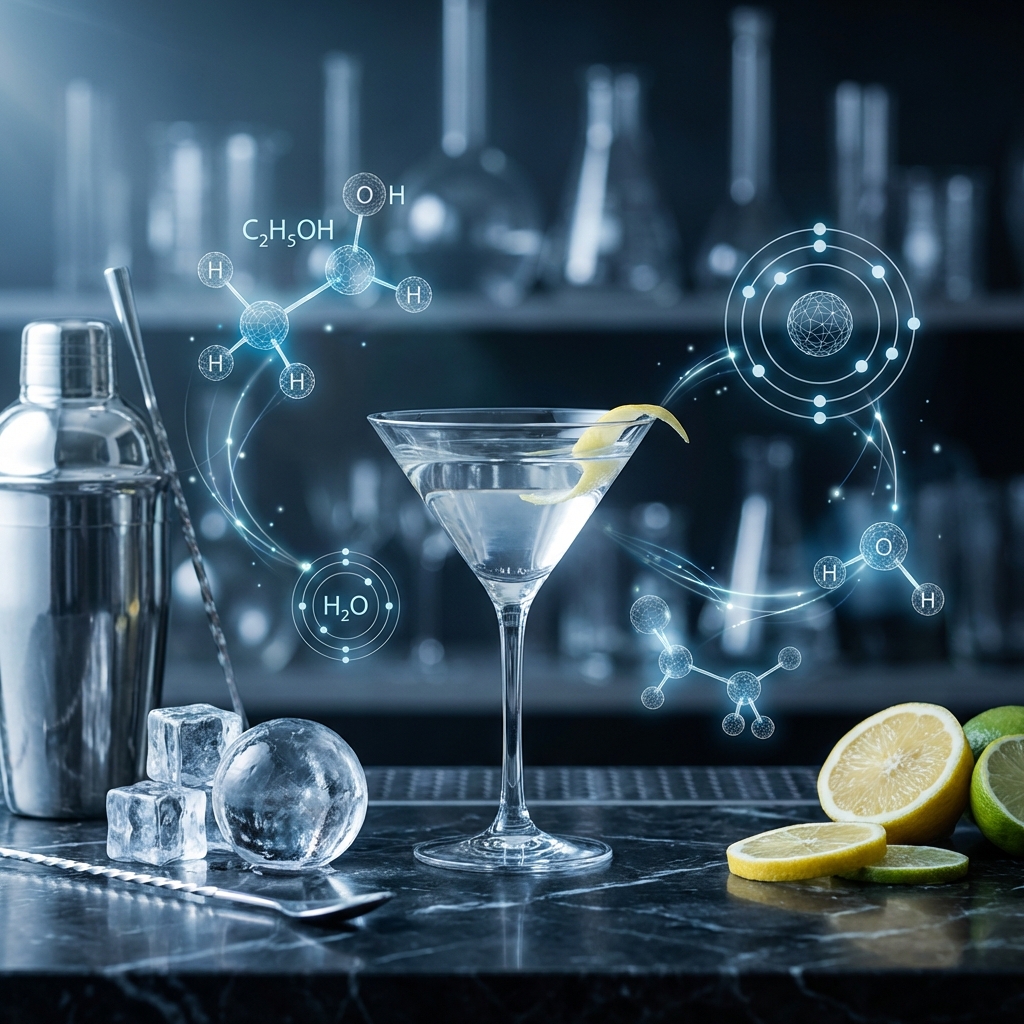
The Hidden Science: Why Bartenders Are Chemists
A great cocktail isn't just booze and mixers. It's a symphony of temperature, dilution, aeration, and balance—all governed by physics and chemistry. Understanding these principles separates a good drink from a transcendent one.
Ice: The Unsung Ingredient
Ice doesn't just chill your drink. It's an active ingredient that transforms it.
How Ice Cools (Spoiler: It's Not What You Think)
Ice cools a drink primarily by melting. When ice melts, it absorbs heat from the liquid (a process called "heat of fusion"). The colder the drink gets, the slower the ice melts. But here's the paradox: using more ice results in less dilution, because abundant ice chills the drink faster and stays colder longer.
Types of Ice & Their Purpose
- Large Cubes/Spheres: Small surface area = slow melting = controlled dilution. Perfect for sipping spirits (Old Fashioned, Whisky on the rocks).
- Standard Cubes: Balanced chill + dilution. Ideal for shaken cocktails (Margaritas, Daiquiris).
- Crushed Ice: Huge surface area = rapid chill + significant dilution. Great for refreshing drinks consumed quickly (Mint Julep, Tiki cocktails).
- Clear vs. Cloudy Ice: Clear ice (made from purified water) melts slower. Cloudy ice has trapped air bubbles and melts faster.
"Dry" vs. "Wet" Ice
Fresh ice straight from the freezer ("dry ice") is colder and has no surface moisture. It chills efficiently with minimal dilution. Ice that's been sitting out ("wet ice") has started to melt—adding it to a drink front-loads the dilution without providing optimal chill. Pro bartenders drain this meltwater before use.
Dilution: The Secret Ingredient
Here's the truth: dilution is not a bug, it's a feature. Water (from melted ice) is a critical ingredient that:
- Tempers the alcohol's intensity, making it easier to taste nuanced flavors.
- Integrates the ingredients, creating a cohesive drink rather than separated layers.
- Improves mouthfeel and smoothness.
Target dilution for a balanced cocktail: 15-25%. Too little? Harsh and disjointed. Too much? Watery and bland.
Shaking vs. Stirring: The Science
Shaking (25-30% Dilution + Aeration)
When: Cocktails with citrus, dairy, eggs, or thick syrups (Margarita, Whisky Sour, Espresso Martini).
Why: Shaking aerates the drink (tiny air bubbles), creating a frothy texture. It also homogenizes ingredients that don't naturally mix (like egg whites or cream). The vigorous motion produces more dilution than stirring.
Stirring (15-20% Dilution, No Aeration)
When: Spirit-forward cocktails with no citrus or cream (Martini, Manhattan, Negroni).
Why: Stirring maintains clarity and silkiness. There's no aeration, so the drink remains transparent and elegant. Optimal stir time: 22-28 seconds for target dilution and chill.
The Balance Equation: Sweet, Sour, Bitter
The classic cocktail ratio is: 2 parts spirit : 1 part sweet : 1 part sour.
- Spirit (2 parts): Whisky, gin, rum, vodka.
- Sweet (1 part): Simple syrup, liqueur, vermouth.
- Sour (1 part): Lemon or lime juice.
Examples: Whisky Sour (2 whisky : 1 syrup : 1 lemon), Daiquiri (2 rum : 1 syrup : 1 lime). Bitter elements (like Angostura or Campari) add complexity but aren't always required.
Pro Tips for Home Bartenders
- Pre-Chill Everything: Cold glassware + cold ingredients = less dilution needed.
- Use Fresh Ice: Don't reuse ice from shaking. It's already melted slightly.
- Measure Dilution: Weigh your cocktail before/after mixing. Most drinks should gain 15-25% in weight from water.
- Respect the Technique: Shake citrus drinks. Stir spirit-forward drinks. No exceptions.
Resources & Community
- Art of the Cocktail - Cocktail science and bartending tutorials.
- Difford's Guide - Encyclopedia of cocktail recipes and techniques.
- Local: Check our Events page for mixology workshops.
Cocktails on Screen
From Bond to Cruise, bartending has had its Hollywood moments:
Must-Watch Films
- Cocktail (1988): Tom Cruise's iconic bartending film. "Everything ends badly, otherwise it wouldn't end." Flair bartending and 80s vibes.
- Casino Royale (2006): Daniel Craig's James Bond orders his first Vesper martini: "Shaken, not stirred." The recipe: gin, vodka, and Lillet Blanc.
- The Shining (1980): Jack Torrance's descent into madness at the Overlook Hotel bar. "All work and no play makes Jack a dull boy."
- Lost in Translation (2003): Bill Murray and Scarlett Johansson bond over whisky highballs in a Tokyo hotel bar.
- Barfly (1987): Mickey Rourke as Charles Bukowski's alter ego, spending his days and nights at the bar. Raw and honest.
Documentaries
- Hey Bartender (2013): Explores the craft cocktail movement and profiles legendary bartenders.
- Sour Grapes (2016): While about wine fraud, it's a masterclass in tasting, authenticity, and the science of flavor.
Cocktail Jokes & Bar Banter
Lighten the mood with these bartending classics:
- Q: What's the difference between a bartender and a chemist?
A: AboutNext Steps
00,000 a year! - Q: Why did the bartender break up with the glass?
A: It was too high-maintenance and kept cracking under pressure! - Q: What do you call a sad espresso martini?
A: Depresso! - Q: Why don't scientists trust atoms in cocktails?
A: Because they make up everything! - Bartender: "What'll it be?"
H₂O: "I'll have H₂O."
H₂O₂: "I'll have H₂O too!"
(H₂O₂ did not survive the night.) - "I'm not drunk, I'm just chemically imbalanced."
- "Cocktails: Liquid science experiments you're allowed to drink."
- "Trust me, I'm a bartender. I know the chemistry of happiness."
Next Steps
Put theory into practice. Make two Daiquiris side-by-side: one shaken for 10 seconds, one for 20 seconds. Taste the difference. You've just become a cocktail scientist.
Julian Cross
Food & Drink EditorJulian writes about spirituality, community, and finding peace in urban life.
Braving the Cold: Yorkshire Winter Activities & Walks