

The Art of Solo Dining: Reclaiming the Table for One

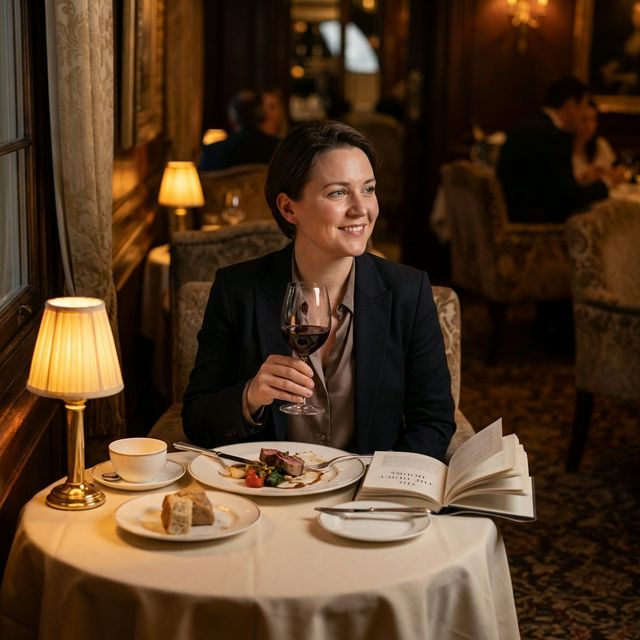
The Spotlight Effect: Nobody Is Actually Looking at You
Picture this: You're standing outside a restaurant, stomach growling, phone in hand. You want to go in. You're hungry. The food looks amazing. But you're alone—and the thought of walking in, asking for "a table for one," and sitting by yourself while couples and groups laugh around you feels... exposing. Vulnerable. Like everyone will stare and think, "Look at that poor person eating alone."
Here's the truth that will set you free: Nobody is looking at you.
Psychologists call this the "spotlight effect"—our tendency to vastly overestimate how much others notice us. A 2000 study by Cornell University found that people believe others notice their appearance and behavior 40% more than they actually do. When you walk into a restaurant alone, you feel like a spotlight is following you. In reality, other diners glance up for 2 seconds, register "person entering," and return to their conversations.
They're not judging you. They're not pitying you. They're wondering if they should order dessert, checking their phones, or arguing about who's paying the bill. You are, quite simply, not the main character in their story.
And once you internalize this—truly believe it—solo dining transforms from an anxiety-inducing ordeal into one of life's great pleasures.
The Case for Solo Dining
1. Eat Exactly What You Want
No compromises. No "Where do you want to go?" "I don't know, where do you want to go?" No settling for Italian when you're craving Thai because your dining companion doesn't like spicy food.
Solo dining means:
- Choosing the restaurant you actually want
- Ordering the dish you crave, not the "safe" option
- Eating at your own pace—no rushing, no waiting
- Changing your mind last-minute without disappointing anyone
2. Mindful Eating
When was the last time you actually tasted your food? Not just consumed it while chatting, scrolling, or multitasking—but truly savored it?
Solo dining creates space for mindfulness:
- Notice the flavors, textures, presentation
- Appreciate the chef's craft
- Eat slowly, without social pressure to match others' pace
- Recognize when you're full (instead of finishing because everyone else is still eating)
A 2019 study in the journal Appetite found that people eating alone consumed 35% less food and reported higher meal satisfaction than those dining in groups. Solo dining isn't just enjoyable—it's healthier.
3. People-Watching Paradise
Restaurants are theaters of human behavior. Solo dining gives you a front-row seat to:
- First dates (the nervous laughter, the awkward silences)
- Anniversary dinners (the comfortable silence of long-term couples)
- Business meetings (the power dynamics, the fake laughs)
- Family gatherings (the chaos, the love, the arguments)
You become an observer, not a participant—and there's a quiet joy in watching life unfold around you.
4. Time for Yourself
In our hyper-connected world, true solitude is rare. Solo dining offers:
- Reading time: Bring a book, magazine, or e-reader
- Thinking time: Process your day, plan your week, daydream
- Writing time: Journal, sketch, work on creative projects
- Nothing time: Just sit. Just be. No agenda.
This isn't loneliness—it's solitude. And solitude is a gift.
5. Building Confidence and Independence
Every solo dining experience strengthens your self-reliance. You prove to yourself:
- You can enjoy your own company
- You don't need others to validate your experiences
- You're capable of navigating the world independently
- Your comfort matters more than others' potential judgments
This confidence spills into other areas of life—solo travel, attending events alone, pursuing hobbies independently.
Overcoming the Fear: A Step-by-Step Guide
Start Small
Don't begin with a fancy restaurant on Saturday night. Build up gradually:
Level 1: Cafes (Easiest)
Coffee shops are solo-dining training wheels. Nobody questions someone alone with a laptop and latte.
- Try: Breakfast or lunch at a local cafe
- Bring: A book, laptop, or newspaper
- Duration: 30-60 minutes
- Why it works: Cafes are designed for solo patrons—you'll blend in perfectly
Level 2: Casual Dining (Moderate)
Fast-casual restaurants with counter service reduce social interaction.
- Try: Pret, Wagamama, Nando's, pizza by the slice
- Bring: Phone or book (optional)
- Duration: 45-90 minutes
- Why it works: Order at counter, minimal server interaction, high solo-diner turnover
Level 3: Sit-Down Restaurants (Intermediate)
Full-service restaurants during off-peak hours.
- Try: Lunch on a weekday, early dinner (5-6pm)
- Bring: Book or just yourself
- Duration: 60-90 minutes
- Why it works: Fewer diners, less pressure, servers are less rushed
Level 4: Fine Dining (Advanced)
Upscale restaurants, peak hours, full experience.
- Try: Saturday night at that restaurant you've been eyeing
- Bring: Just yourself (you've earned this confidence)
- Duration: 2+ hours
- Why it works: You've proven you can do this—now enjoy the luxury
Practical Tips for Your First Solo Meal
1. Choose the Right Restaurant
- Bar seating: Easier than a table—you're facing forward, not exposed
- Counter culture: Ramen shops, sushi bars, diners—counter seating is expected
- Solo-friendly vibes: Busy, casual places where solo diners are common
- Avoid: Romantic restaurants, family-style dining, places with only large tables
2. Timing Matters
- Best times: Lunch (11:30am-1pm), early dinner (5-6:30pm), late dinner (9pm+)
- Avoid: Peak hours (7-8:30pm Friday/Saturday) when restaurants are packed and rushed
- Why: Off-peak means better service, less pressure, more relaxed atmosphere
3. Booking vs. Walk-In
- Book ahead: Reduces anxiety (you know you have a table), shows confidence
- Say "table for one": Own it. Don't apologize or explain.
- Walk-ins: Fine for casual places, but you might wait longer
4. What to Bring
- A book: Classic solo-dining companion, signals "I'm here intentionally"
- E-reader/tablet: Less bulky than books, easier to manage with food
- Journal/notebook: Write, sketch, plan
- Nothing: Advanced move—just sit with your thoughts
- Phone: Fine, but try not to scroll mindlessly—defeats the purpose
5. Interacting with Servers
- Be friendly: Smile, make eye contact, chat if you want
- Don't over-explain: No need to say "My friend canceled" or "I'm traveling alone"
- Ask for recommendations: Servers love helping solo diners—you're easier to please
- Tip well: Solo diners often get smaller tables but take up the same server time
Best Types of Restaurants for Solo Dining
1. Ramen and Noodle Bars
Why they're perfect: Counter seating, quick service, culturally normalized solo dining (especially in Japanese culture).
UK recommendations:
- Bone Daddies (London): Lively atmosphere, excellent ramen, bar seating
- Shoryu Ramen (Multiple cities): Authentic, solo-friendly, affordable
- Wagamama (Nationwide): Long communal tables, fast service
2. Sushi Bars
Why they're perfect: Watch chefs work, counter seating, omakase (chef's choice) menus designed for solo diners.
UK recommendations:
- Sushi Tetsu (London): 7-seat counter, intimate, exceptional (book months ahead)
- Sticks'n'Sushi (Multiple cities): Casual, welcoming, great for beginners
- Yo! Sushi (Nationwide): Conveyor belt format, zero pressure
3. Tapas and Small Plates
Why they're perfect: Order multiple small dishes, try variety, no pressure to finish large portions.
UK recommendations:
- Barrafina (London): Counter seating, Spanish tapas, walk-ins only
- Camino (London, multiple locations): Lively, Spanish, solo-friendly bar
- Dehesa (London): Italian-Spanish fusion, intimate counter
4. Gastropubs
Why they're perfect: Casual atmosphere, bar seating, no judgment—pubs are designed for solo patrons.
UK recommendations:
- The Harwood Arms (London): Michelin-starred pub, welcoming to solo diners
- The Sportsman (Kent): Legendary gastropub, relaxed vibe
- Any Wetherspoons: Zero pretense, cheap, nobody cares if you're alone
5. Hotel Restaurants
Why they're perfect: Accustomed to business travelers dining alone, professional service, no awkwardness.
UK recommendations:
- The Wolseley (London): Grand cafe, solo diners common
- Hawksmoor (Multiple cities): Steakhouse with excellent bar seating
- Hotel restaurant bars: Any major hotel—solo diners are the norm
What to Do While Eating Alone
Reading
The classic solo-dining activity. Best choices:
- Fiction: Get lost in a story, time flies
- Short stories/essays: Finish a piece in one sitting
- Magazines: Light, easy to put down between courses
- Avoid: Heavy non-fiction requiring concentration (hard to balance with eating)
People-Watching
The underrated art of observation:
- Invent backstories for other diners
- Notice body language, interactions, dynamics
- Appreciate the theater of restaurant life
- Find inspiration for creative projects
Writing or Sketching
- Journal about your day
- Write letters (yes, actual letters!)
- Sketch the restaurant, other diners, your food
- Work on creative projects (poetry, stories, ideas)
Mindful Eating
The most advanced option—just eat, fully present:
- Notice flavors, textures, temperatures
- Appreciate the presentation
- Chew slowly, savor each bite
- Put down your fork between bites
- Engage all your senses
Chatting with Staff
Servers, bartenders, and chefs often enjoy chatting with solo diners:
- Ask about menu recommendations
- Inquire about ingredients or preparation
- Share feedback (genuine, not forced)
- Build rapport—you might become a regular
Addressing Common Fears
"What if people think I have no friends?"
Reality: They think you're confident, independent, and comfortable with yourself. Solo dining signals self-assurance, not loneliness.
Reframe: "I'm so secure in myself that I don't need company to enjoy a meal."
"What if the server feels sorry for me?"
Reality: Servers see solo diners constantly—business travelers, locals, regulars. You're not special or pitiable; you're just another customer.
Many servers prefer solo diners: easier to please, better tippers, less demanding.
"What if I look awkward just sitting there?"
Reality: You look like someone enjoying a meal. Bring a book or phone if it helps, but you don't need a "prop" to justify your presence.
Remember: You paid for that table. You have every right to occupy it, alone, without explanation.
"What if I get seated at a bad table?"
Reality: Sometimes solo diners get tucked away. If you're uncomfortable, politely ask to move: "Would it be possible to sit at the bar/by the window instead?"
Most restaurants will accommodate. If they don't, consider whether you want to return.
The Benefits Beyond the Meal
Building Self-Reliance
Solo dining is practice for solo living—not in the sense of being alone, but in the sense of being self-sufficient. It teaches:
- You can enjoy experiences without external validation
- Your comfort matters more than others' opinions
- Solitude is different from loneliness
- You are enough, just as you are
Improving Social Skills
Counterintuitively, solo dining can improve your social skills:
- You're more likely to chat with servers, bartenders, neighboring diners
- You practice small talk without the crutch of your usual social group
- You become more observant of social dynamics
- You learn to be comfortable in your own skin—which makes you more comfortable with others
Enhancing Travel
Once you're comfortable dining alone at home, solo travel becomes infinitely easier. You're not limited to:
- Room service
- Takeaway eaten in your hotel
- Skipping meals because you're too anxious to go out
You can explore local cuisine, try new restaurants, and fully experience your destination.
Solo Dining Around the World
Japan: Solo Dining Mecca
In Japan, solo dining is the norm, not the exception. Many restaurants cater specifically to solo diners:
- Ichiran Ramen: Individual booths with privacy screens
- Standing sushi bars: Quick, efficient, solo-friendly
- Conveyor belt restaurants: No server interaction needed
Cultural context: Japanese culture values personal space and independence. Solo dining isn't lonely—it's respectful of others' time and space.
France: The Art of Solo Dining
Parisians have perfected solo dining:
- Cafe culture encourages solo patrons
- Bistros welcome solo diners at bar seating
- Reading while eating is expected, not rude
The French understand: good food deserves full attention, and sometimes that means dining alone.
UK: Growing Acceptance
British solo dining is on the rise:
- 2023 survey: 42% of UK adults have dined alone in the past year (up from 28% in 2018)
- Restaurants increasingly design for solo diners (bar seating, counter service)
- Stigma is fading, especially in cities
Becoming a Regular
One of solo dining's greatest joys: becoming a regular. Benefits:
- Personalized service: Staff remember your preferences
- Better tables: Regulars get priority
- Community: You're part of the restaurant's ecosystem
- Surprise treats: Complimentary appetizers, desserts, drinks
How to become a regular:
- Visit the same restaurant 3-5 times
- Be friendly and consistent (same day/time if possible)
- Tip well
- Remember staff names
- Provide genuine feedback
Resources and Further Reading
- The Guardian: The Rise of Solo Dining
- BBC: Why Eating Alone Is Good for You
- Time Out: Best Solo Dining Restaurants
- OpenTable - Book tables for one with confidence
Your First Solo Meal: A Challenge
If you've never dined alone, here's your challenge:
This week, eat one meal alone in public.
Start small:
- Choose a cafe or casual restaurant
- Go during off-peak hours
- Bring a book or just yourself
- Order something you genuinely want
- Stay for at least 30 minutes
Notice:
- How many people actually look at you (spoiler: almost none)
- How the food tastes when you're fully present
- How it feels to do something just for yourself
- How empowering it is to prove you can do this
Then do it again. And again. Until it's not scary—it's just Tuesday.
Reclaiming the Table for One
Solo dining isn't about being alone. It's about being with yourself—and recognizing that your own company is valuable, worthy, and enough.
It's about rejecting the idea that meals are only meaningful when shared, that restaurants are only for groups, that enjoying your own presence is somehow sad or lesser.
It's about reclaiming autonomy over one of life's great pleasures: good food, savored slowly, in whatever company you choose—including your own.
So book that table. Order that dish. Bring that book, or don't. Sit at the bar, or request the window seat. Stay for dessert, or leave after the main.
The table for one is yours. And it's been waiting for you.
Ruth Naomi
Lifestyle & ConfidenceAn expert contributor to the Social for Life community, sharing insights on lifestyle and beyond.

Wild Swimming: A Beginner's Guide to Cold Water Therapy