
2026: The National Year of Reading
Why 2026 Matters for Readers
2026 has been officially declared the National Year of Reading in the United Kingdom—a landmark initiative spearheaded by the Department for Education and the National Literacy Trust. Launched on January 13, 2026, at Arsenal Football Club's Emirates Stadium by Education Secretary Bridget Phillipson, this campaign represents a nationwide effort to reverse the worrying decline in reading for pleasure and reconnect people of all ages with the transformative power of books.
With the rallying cry "Go All In," this year-long movement encourages individuals to explore their existing passions—whether football, music, cooking, or fashion—through reading. It's not just about picking up a book; it's about discovering that there's a story, guide, or community waiting for every interest you have.
This isn't merely a moment for bibliophiles. The National Year of Reading 2026 addresses a national crisis: in 2025, reading enjoyment among 8-18 year-olds hit its lowest level in 20 years, with only 32.7% reporting they enjoy reading in their free time. Among adults, half of the UK population does not regularly read for pleasure. This initiative seeks to change that narrative, making 2026 a turning point for literacy and community connection across Britain.
The Historical Context: A Legacy of Reading Campaigns
Previous National Reading Initiatives
The UK has a proud history of championing literacy. The first National Year of Reading was launched in 1998, followed by another in 2008. Both initiatives demonstrated the power of coordinated national efforts to boost reading engagement, particularly among children. The 2026 campaign builds on these foundations but with a modern twist, leveraging digital platforms, celebrity ambassadors, and partnerships across sports, arts, and business sectors.
The Literacy Landscape Today
Recent statistics paint a concerning picture:
- 50% of UK adults do not regularly read for pleasure (down from 58% in 2015)
- 35% are "lapsed readers"—people who once read regularly but no longer do
- Only 32% of young adults (16-24) are regular readers, the lowest of any age group
- Daily reading rates among 8-18 year-olds hit a record low of 18.7% in 2025
These trends have profound implications. Research consistently shows that reading for pleasure correlates with improved wellbeing, enhanced literacy skills, better academic performance, and even higher lifetime earnings. The National Year of Reading 2026 aims to reverse these declines through a comprehensive, multi-sector approach.
The "Go All In" Campaign: Structure and Goals
Official Partners and Stakeholders
The campaign brings together an unprecedented coalition of over 30 organisations, including:
- The Premier League (building on their 25-year partnership with the National Literacy Trust through "Premier League Reading Stars")
- Arts Council England
- Major publishers and bookshops
- Libraries across England
- Schools and educational institutions
Government Investment and Support
The UK government has committed significant resources to support literacy in 2026 and beyond:
- £27.7 million to support reading and writing in primary schools
- £5 million dedicated to secondary school reading initiatives
- £10 million to ensure every state primary school in England has a library by 2029
- 72,000 free books distributed in disadvantaged communities in summer 2025 to kickstart the campaign
- Introduction of a mandatory reading test for all Year 8 pupils
- A goal to recruit 100,000 literacy volunteers across the UK
High-Profile Ambassadors
The campaign features a diverse array of ambassadors who exemplify how reading connects to varied passions:
- Leah Williamson (England football captain)
- Cressida Cowell (author of How to Train Your Dragon)
- George the Poet (musician and spoken word artist)
- Michael Morpurgo (author of War Horse)
- Julia Donaldson (author of The Gruffalo)
- Richard Osman (author and broadcaster)
- Joe Wicks (fitness coach and children's author)
- Jack Edwards (BookTuber and social media influencer)
Events and Activities Throughout 2026
National Events Calendar
Throughout the year, a diverse programme of events will take place across the UK:
World Book Day 2026 (March 5, 2026)
A cornerstone event within the National Year of Reading, World Book Day 2026 aims to ensure every child in the UK has the opportunity to own a book. Schools, libraries, and bookshops participate with costume days, author visits, and free book tokens.
Summer Reading Challenge 2026: "Read to the Beat"
Organised by libraries nationwide, this year's theme connects reading with music. Children are encouraged to read a set number of books over the summer holidays, earning rewards and certificates along the way.
"Drop Everything and Read" (DEAR) Days
Schools across England are participating in coordinated reading days where students and staff pause all activities to read together, emphasizing that reading is a priority worth making time for.
Local and Community Initiatives
Local authorities and organisations are creating tailored programmes:
- Warwickshire Libraries are hosting author events, "Book Bingo" challenges, and parent-and-baby reading sessions
- Star Academies is implementing a "Year of Reading" across its network of schools
- Libraries nationwide are running storytelling weeks, creative writing competitions, and reading marathons
How to Participate
Anyone can get involved through the official website: GOALLIN.ORG.UK. The site provides:
- A calendar of local and national events
- Reading challenges and downloadable resources
- Tips for parents, teachers, and community organisers
- Stories from ambassadors about their reading journeys
The Power of Book Clubs: Reading as a Social Activity
Why Join a Book Club in 2026?
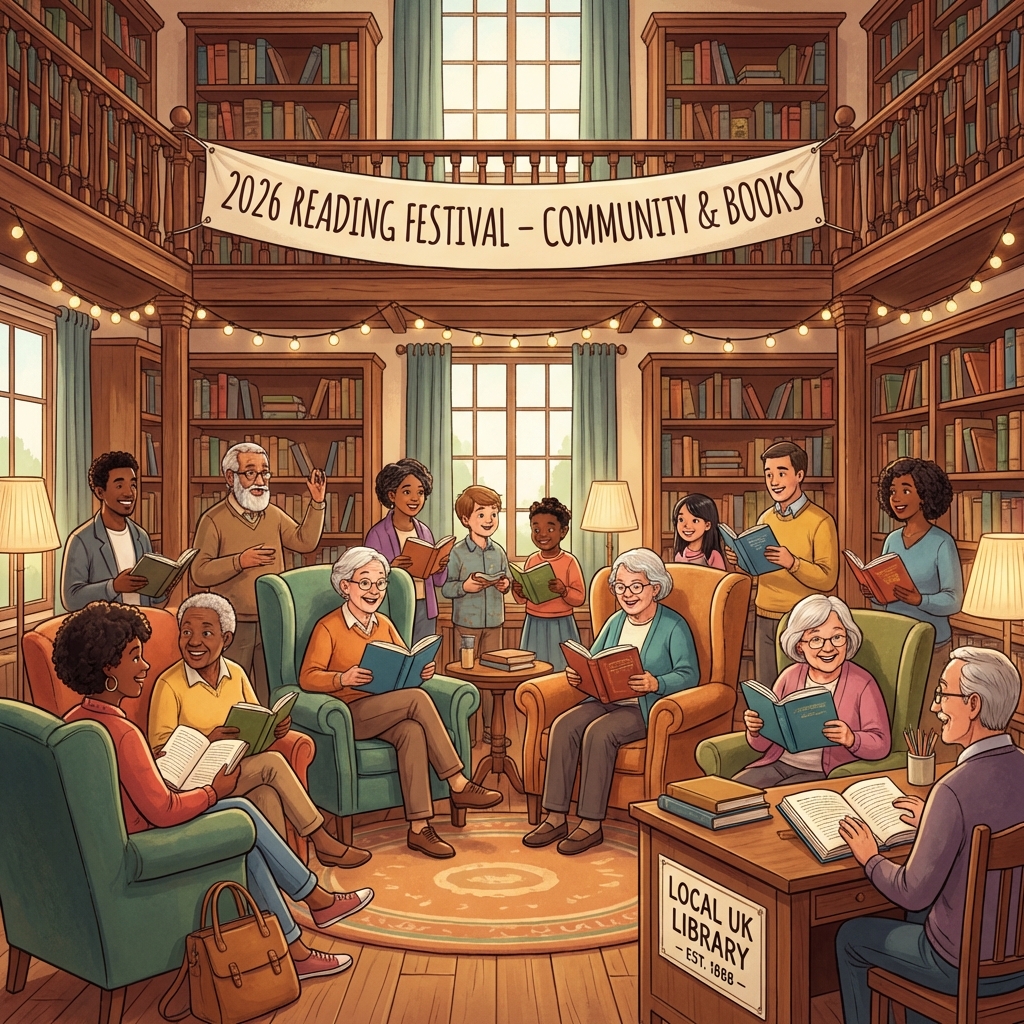
The National Year of Reading isn't just about solitary reading—it's about building reading communities. Book clubs embody this perfectly, offering a space where stories become conversations and readers become friends.
Research from The Reading Agency reveals compelling statistics about book club members:
- 77% read more books than they did before joining
- 94% read more widely across different genres
- 91% find reading more enjoyable
- 80% enjoy books more because of group discussions
- 50% more likely to be regular readers
- 86% more likely to feel connected to others
- 55% more likely to report feeling less lonely
Beyond Books: The Wellbeing Benefits
Joining a book club offers advantages that extend far beyond the page:
- Mental Health: Increased relaxation, calmness, and concentration
- Social Connection: Combat loneliness and build meaningful friendships
- Intellectual Stimulation: Critical thinking, comprehension, and exposure to diverse perspectives
- Personal Growth: Confidence to explore unfamiliar genres and authors
- Digital Detox: A sober, screen-free social activity
The Book Club Boom
Book clubs are experiencing a cultural renaissance in the UK. Eventbrite reported a 350% increase in book club listings over the past four years, attracting more than 127,000 attendees. "Book club" has returned to the top 10 most searched events on Meetup. This resurgence reflects a broader desire for authentic connection and community in a post-pandemic world.
Getting Started: A Guide for Different Readers
For Complete Beginners: How to Find Your First Book Club
Never been in a book club? Here's how to start:
- Check Your Local Library: Most libraries host free reading groups for different ages and interests. Ask at the front desk or check their website.
- Search Online Platforms:
- Meetup.com – Search "book club" + your city
- Eventbrite – Filter by "Books & Literature" in your area
- Facebook Groups – Search "[Your City] Book Club"
- Visit Independent Bookshops: Many host monthly book clubs and author events. Ask staff for recommendations.
- Browse Ed2Talk: Explore book clubs in your area through our platform.
- Start Small: Attend one or two meetings before committing. Most groups welcome visitors!
For Established Readers: How to Start Your Own Book Club
Want to create your own reading community? Follow these steps:
- Define Your Focus: Will it be genre-specific (e.g., crime, science fiction, literary fiction) or eclectic? Decide on the vibe: casual or analytical?
- Gather Your Founding Members: Invite 4-8 people to start. Too few and cancellations hurt; too many and discussions get unwieldy.
- Set a Schedule: Monthly meetings work best for most groups. Pick a consistent day and time (e.g., first Tuesday of each month at 7 PM).
- Choose Your First Book: Pick something widely available and moderately popular—nothing too niche or too long for your inaugural read.
- Decide on the Venue: Rotate between members' homes, meet at a pub or café, or use a library meeting room.
- Create a Simple Structure: Spend 15 minutes catching up, 60 minutes discussing the book, and 15 minutes choosing the next read.
- Promote Your Group: List it on Ed2Talk, Meetup, or local community boards.
For Educators: Incorporating the National Year of Reading into Your School
- Register for Official Resources: Visit GOALLIN.ORG.UK to access lesson plans, reading challenges, and promotional materials.
- Organise a DEAR Day: Schedule a "Drop Everything and Read" day where all lessons pause for 30 minutes of silent reading.
- Invite an Author: Many authors visit schools for free or reduced fees as part of the 2026 campaign. Contact publishers or check the National Literacy Trust website.
- Create a Social Reading Space: Research shows that dedicated reading areas in schools increase engagement by 84% among participants.
- Partner with Your Local Library: Coordinate a class visit or invite a librarian to speak about the Summer Reading Challenge.
Modern Reading: Digital, Audio, and Social Media Communities
The Rise of Digital Reading Communities
Reading in 2026 extends far beyond physical books in quiet rooms. Digital platforms have created vibrant, global reading communities:
#BookTok and #BookTube
TikTok and YouTube have become major drivers of book sales and reading trends. Creators like Jack Edwards (a National Year of Reading ambassador) share reviews, recommendations, and reading vlogs. The hashtag #BookTok has generated billions of views, particularly boosting Young Adult and Romance novels.
Goodreads
With millions of UK users, Goodreads allows readers to track their reading, write reviews, and join genre-specific discussion groups. Set a reading goal for 2026 and connect with fellow readers worldwide.
Online Book Clubs
Can't attend in-person meetings? Virtual book clubs via Zoom, Discord, or Facebook Groups offer flexibility and global reach. Search for:
- Reese's Book Club (celebrity book club)
- The Pigeonhole (serialised reading)
- r/books on Reddit (discussions and recommendations)
Audiobooks and Podcasts
Don't discount audiobooks as "not real reading." The National Literacy Trust recognises that listening to stories engages the same comprehension and imagination as reading print. Platforms like Audible, Libro.fm, and Spotify Audiobooks make it easy to "read" while commuting, exercising, or cooking.
Book-focused podcasts like Backlisted, The Penguin Podcast, and Between the Covers offer deep dives into authors and genres, perfect for expanding your literary horizons.
Community Resources: Where to Find Reading Events and Groups
Essential Websites
- GOALLIN.ORG.UK – Official National Year of Reading website
- National Literacy Trust – Research, resources, and campaign updates
- UK Government Announcement – Official government details
- The Reading Agency – Runs the Summer Reading Challenge and Reading Groups for Everyone
- World Book Day – Information on the March 2026 celebrations
- BookTrust – Children's reading charity with resources for parents and educators
Local Libraries and Bookshops
Your local library is the gateway to the National Year of Reading. Most offer:
- Free book clubs and reading groups
- Author events and talks
- Children's storytelling sessions
- Access to digital libraries and audiobooks
Independent bookshops are also cultural hubs for readers. Find your nearest shop and ask about their event calendar. Many host launch parties, signing events, and themed reading nights.
Explore libraries and bookshops near you: Browse places on Ed2Talk
Social Media and Online Communities
- Facebook: Search "[Your City] Book Club" or join groups like "UK Book Club Members" and "British Book Lovers"
- Reddit: r/books, r/bookclub, r/suggestmeabook
- Discord: Many genre-specific servers exist for fantasy, science fiction, romance, and literary fiction readers
- Instagram: Follow #UKBookstagram, #BookClubUK, and #NationalYearOfReading for inspiration
Your 2026 Reading Goals
The 10-Minute Daily Reading Challenge
The campaign encourages everyone to read for just 10 minutes a day. That's 3,650 minutes over the year—enough to read approximately 12-15 books, depending on reading speed and book length.
Suggested Goals for 2026
- Read 12 books (one per month) – track your progress on Goodreads
- Try three new genres you've never explored (e.g., if you love thrillers, try historical fiction or poetry)
- Attend at least one author event or literary festival in your area
- Join a book club (or start your own)
- Read at least one book by a UK author to celebrate British literature
- Share your favourite book with someone who doesn't read regularly
- Visit five new libraries or bookshops in your region
The Future of Reading in the UK
Beyond 2026: Sustaining the Momentum
The National Year of Reading is not a one-off campaign. The government's commitment to ensuring every primary school has a library by 2029 signals long-term investment in literacy infrastructure. The recruitment of 100,000 literacy volunteers aims to create a sustained network of reading advocates across communities.
Why This Matters for Everyone
Reading for pleasure is linked to:
- Improved mental health and reduced stress
- Better academic and professional outcomes
- Increased empathy and understanding of diverse perspectives
- Stronger communities through shared cultural experiences
- Higher lifetime earnings (studies show regular childhood readers earn significantly more as adults)
Whether you're a lifelong bookworm or someone who hasn't picked up a book since school, 2026 offers a fresh start. The National Year of Reading isn't about pressure or performance—it's about rediscovering the simple pleasure of a good story, the thrill of learning something new, and the warmth of discussing ideas with others.
Get Involved Today
The National Year of Reading is happening right now. Every book you pick up, every discussion you have, and every reading group you join contributes to a national movement to make Britain a nation of readers once again.
Your first steps:
- Visit GOALLIN.ORG.UK and sign up for updates
- Browse book clubs on Ed2Talk and join one near you
- Check upcoming reading events in your area
- Set your 2026 reading goal on Goodreads or in a journal
- Visit your local library this week and borrow a book
2026 is the year we all go all in. What will you read first?
References
Official Websites
- GOALLIN.ORG.UK – National Year of Reading Official Site
- UK Government – National Year of Reading Announcement
- National Literacy Trust
- The Reading Agency
- World Book Day 2026
Research and Statistics
- National Literacy Trust – Children's Reading in 2025 Report
- The Guardian – UK Adult Reading Habits Survey
- The Reading Agency – Book Club Benefits Research
Book Organisations
Related Content on Ed2Talk
Julian Cross
An expert contributor to the Social for Life community, sharing insights on book clubs and beyond.

The Art of the Dinner Party: Reclaiming the Table
